Smart home installation is the work that turns a bag of boxes into a system that runs itself. A professional crew covers four stages: the walk, the wiring, the programming and the handover. Knowing the scope keeps quotes honest and timelines real.
The frame matters as much as the gear. Devices that carry the Matter mark, from the Connectivity Standards Alliance, pair with one code. They then join any major platform without rework. An installer who builds on that standard leaves a house that any successor can service.
The Site Walk Comes First
Every serious job starts with a walkthrough. The crew maps Wi-Fi dead zones, checks the router, counts wall switches and looks for neutral wires. Placement questions get settled early: camera sightlines, thermostat walls, panel height. The walk ends with a device list and a labor estimate in writing.
The network gets attention first because everything rides on it. The Federal Trade Commission tells installers and owners the same thing. Change default logins, use WPA3 encryption and keep firmware fresh. A pro who skips the router is decorating, not installing.
The walk should end with paper. A device list, a labor line and a finish date give both sides something to check against. Verbal scope is where budgets go to die. Changes after signing should come with a fresh page, not a shrug.
What Smart Home Installation Covers Room By Room
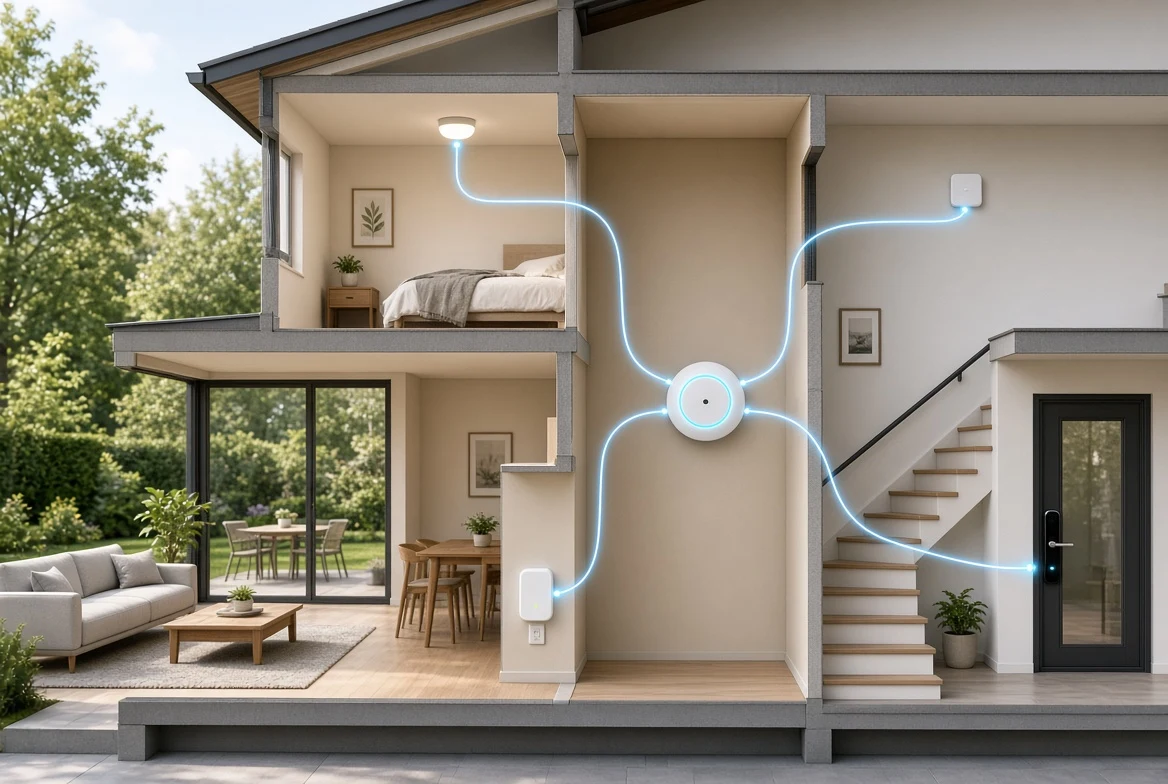
The entry gets sensors, a lock and often a camera with a clean doorstep view. Kitchens get leak sensors under the sink, plus smoke and carbon monoxide alarms tied to the system. Living rooms get scene lighting and the hub itself, placed central and high. Bedrooms get simple controls that work at night without a phone.
Utility rooms close the loop. A monitor on the panel and a sensor at the water heater watch the biggest loads. A smart thermostat on the hall wall turns the basement into the house's brain, not its blind spot.
Garages and exteriors finish the map. A controller on the door and a sensor on the freezer take minutes each. A camera under the eave lands fast too, once the network reaches it. Outdoor runs need rated cable and sealed boxes.
Walls, Ceilings And Clean Work
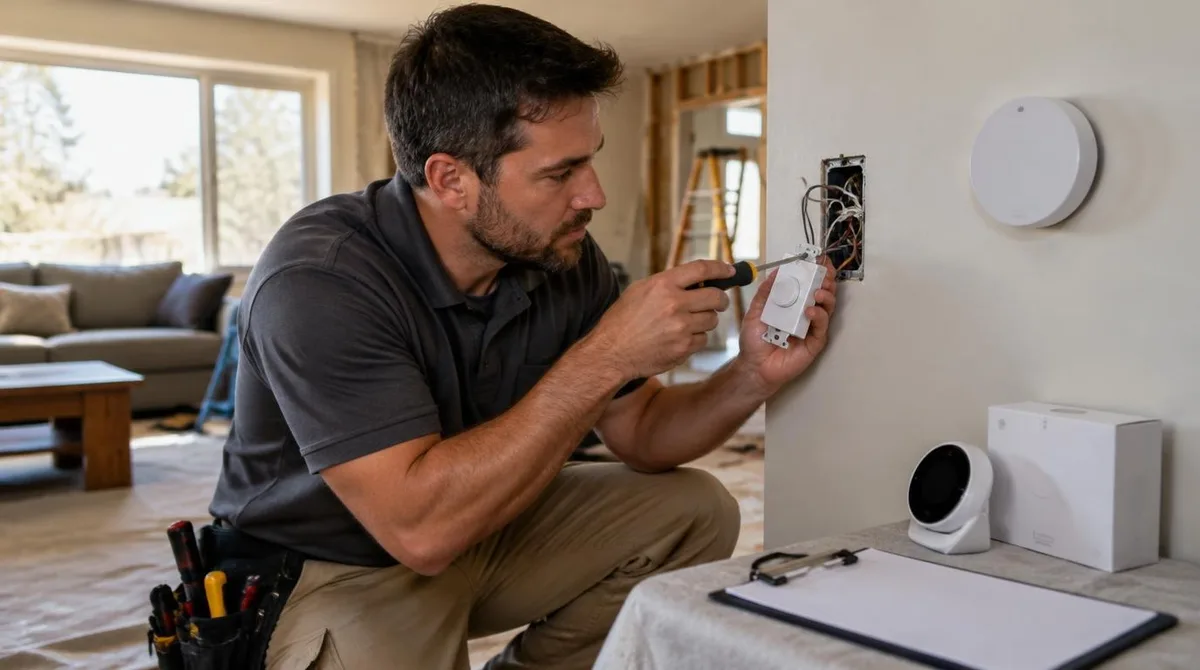
Retrofits follow a code of their own. Crews fish wires through existing walls, patch paint and label every circuit they touch. Certification marks matter here: safety tested gear from bodies like UL carries real weight behind the wall. Old houses add their own rules, from plaster to knob and tube surprises. Good installs are invisible installs.
Patch kits and touch up paint should ride on the truck. Cable runs get strapped, not draped, and every plate sits flush. Small tells like these separate craftspeople from box shifters.
Testing, Training And Handover
The last day is the real product. The crew fires every scene, kills the internet to prove local control and changes every default code. Then comes training: how to add a device, how to edit a rule, who to call. A smart home installation is finished when the household can run it alone.
Warranty terms deserve a read before signing. Labor coverage often differs from device coverage, and the handover is the moment to get that in writing. A folder or shared doc with passwords, manuals and network names should leave with the keys. Support windows matter too: a crew that answers in year two earned its fee.
Conclusion: Booking The Work
Smart home installation is drifting toward flat packages as standards spread. Watch for Matter certified rigs that cut programming hours, and for security labels that make device vetting faster. The best crews now sell less wiring and more wisdom. The room by room checklist above is how to audit them.