
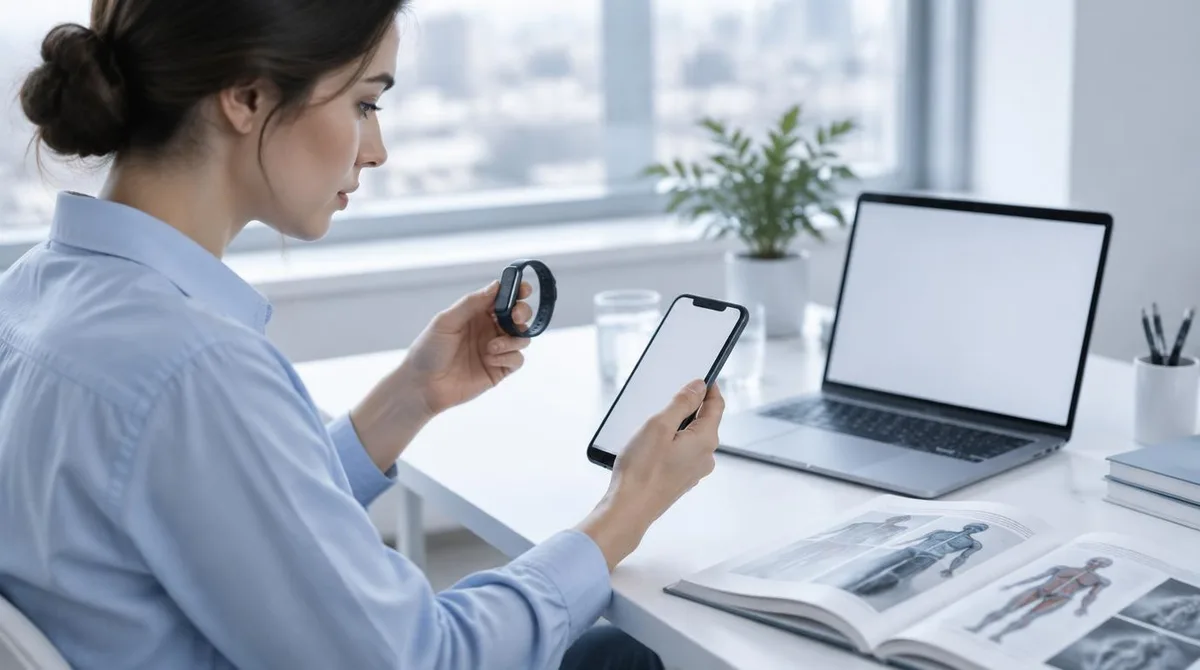
Search for health tech news today and you get a flood of stories: new apps, new wearables, new hospital software, new warnings. The phrase covers everything from a city health department mailing free naloxone kits to a startup raising money for an AI diagnostic tool. The hard part is not finding the news. It is knowing which stories describe something that works, and which describe something that merely exists.
This guide explains how to read that coverage. It gives you the mechanism first: what health technology actually is, who produces the news, and which questions separate a real development from a press release. No medical training needed. Just a short list of things to check before you believe a headline.
What counts as health tech news?
Health technology is any tool that applies engineering or software to health. That includes obvious things like fitness trackers and telehealth apps. It also includes less visible things: scheduling software at a clinic, a city website that lets residents order free medication by mail, or a database that tracks disease outbreaks. The scope is wide because health itself is wide.
That matters for readers. As Wikipedia's overview of health explains, health is a multidimensional concept covering physical and emotional well-being, shaped by individual choices and by structural factors such as how easily a person can reach care in the first place. A story about a new app sits at one end of that spectrum. A story about a public health agency expanding low-cost services sits at the other. Both are health tech news. They just answer different questions.
Who is actually making the news?
Most health tech stories come from one of four places. Public agencies announce services and warnings. Companies announce products and funding. Researchers publish studies. Regulators approve, restrict, or investigate. Each source has a different job, and that job shapes what the story can honestly say.
A public agency story is usually about access. The New York City Department of Health and Mental Hygiene, for example, uses its site to tell residents about free naloxone that can reverse an opioid overdose, low- to no-cost sexual health services regardless of immigration status, and current disease cluster investigations. That is technology in the broadest sense: systems that get care to people. When you read a story like that, the useful question is whether the service exists where you live, not whether it is innovative.
A company story is usually about a product. It will sound exciting because its job is to attract customers and investors. That does not make it false. It makes it a starting point, not a conclusion.
How to tell a solid story from a pitch
Three checks do most of the work.
- Who is the source? A claim traced to a named agency, a published study, or a regulator is stronger than a claim traced to a company's own blog. Companies are the attributed source of their own metrics, and that is fine, but it is not independent verification.
- What is measured? A wearable that "tracks sleep" and a wearable that "improves sleep" are different claims. The first describes a feature. The second describes an outcome, and outcomes need evidence.
- What is the approval status? Software that gives wellness tips and software that diagnoses a condition sit in different regulatory categories. If a story does not say which one applies, that gap is the story.
Wikipedia's health entry notes that definitions of health have shifted over time, from the body's ability to function toward a broader idea of well-being and resilience. Health tech marketing often borrows that broader language. Reading the fine print keeps the two apart.
Why the rules behind the headlines matter
Health tech sits under more regulation than most consumer software, because the stakes are medical. That is why coverage so often turns on approvals, warnings, and legal challenges. Readers who understand the regulatory layer get more from every story.
Our analysis: the fastest way to level up is to read health tech news alongside coverage of tech regulation generally. Our guide to Tech Regulation News Today: How to Read the Rules Behind the Headlines explains how to spot which agency is acting and what its powers actually are. The same skill applies when the subject is a diagnostic app instead of a social platform. And when a health tech story involves a merger or a market-dominant platform, the frame in Antitrust Tech News Today: The Old Laws Behind Every New Headline explains why competition regulators care about who controls patient data and referral networks. For related coverage, see Antitrust Tech News Today: The Old Laws Behind Every New Headline.
None of this requires memorizing rules. It requires noticing that a story about "what a device can do" and a story about "what a regulator will allow" are different stories, and that the second often determines the first.
What this means for the person searching the news
If you are scanning health tech news today for practical reasons, sort the stories into three piles. We covered a connected angle in Tech Regulation News Today: How to Read the Rules Behind the Headlines.
- Use now. Public services, free resources, and official health guidance. Check the source's own site to confirm the offer applies to you.
- Watch. New products, funding rounds, and early research. Interesting, but unproven until independent evidence arrives.
- Ignore until confirmed. Claims that a gadget or app will transform your health, when the only evidence is the seller's own description.
That sorting habit beats any single headline. It turns a noisy feed into a short list of things worth your attention.
The honest open question
The evidence base for consumer health technology is still thinner than the marketing around it. Regulators, researchers, and journalists are all working out how much proof a wellness product should need before it makes medical claims. Until that settles, the most reliable rule is the oldest one in health reporting: the bigger the promised benefit, the stronger the evidence you should demand first.