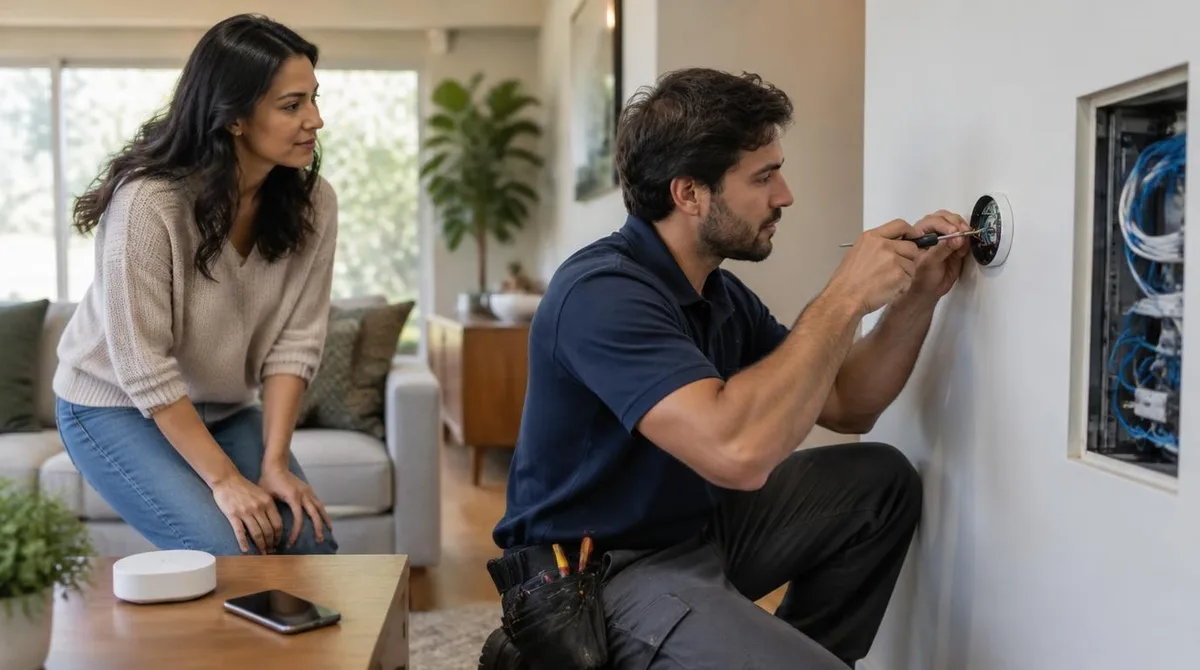
A smart home installer works a trade that grew from three older ones. The alarm tech, the AV integrator and the network engineer all folded into it. The job is part carpentry, part programming and part diplomacy. Anyone with a van can claim the title, so vetting matters more here than in most trades.
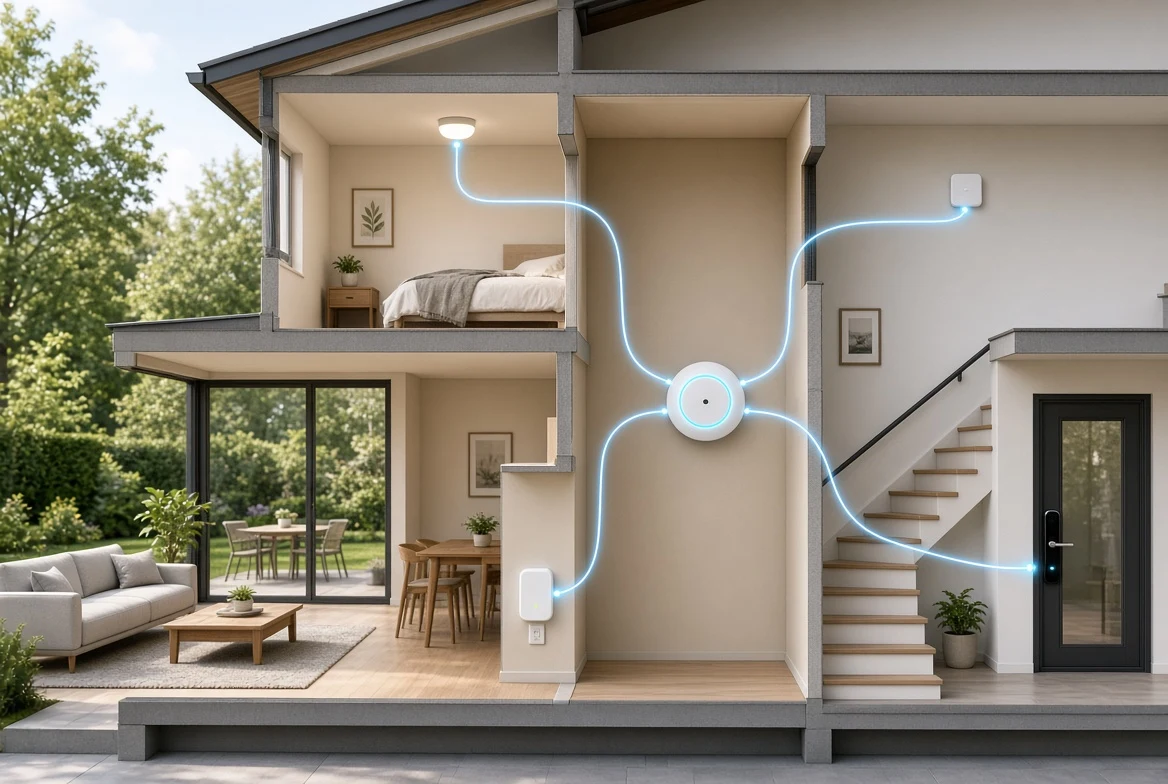
The trade arrived because the work stopped being simple. Standards like Matter, from the Connectivity Standards Alliance, made devices speak one language. Houses still have dead zones, odd wiring and doubtful routers. The installer sells the gap between a bag of gadgets and a home that works.
How The Smart Home Installer Trade Grew
Ten years ago the work split between security dealers and home theater firms. Both added smart devices as side lines, and neither loved the support load. Standards shrank the programming burden, and a lighter trade stepped in: faster jobs, thinner margins, wider market.
The alliance behind Matter now counts more than a thousand members, and its certified products number in the thousands. That scale turned installs from custom work into repeatable packages, which is why the trade is suddenly everywhere.
Utility programs pushed the same direction. Thermostat rebates and demand response plans sent installers into thousands of homes that never wanted a custom rack. Volume taught the trade speed, and speed taught the market to expect it.
Credentials Worth Asking For
No single license covers the whole job, so look for a stack. Low voltage licenses cover wiring where states require them. Manufacturer certifications show a maker trusts the firm. Insurance, both liability and workers cover, is the real credential. Ask for the certificate, not the badge on the van.
References still outrank all of it. A call to last month's customer answers what no card covers: punctuality, clean work and what happened when something broke.
Security questions work as a vetting tool too. NIST guidance for connected devices asks for unique passwords and timely updates. An installer should answer those questions about any gear on the quote. Silence on security is a loud answer.
Reading The Quote Line By Line
A fair quote separates four lines: devices with model numbers, labor hours, programming and the support window. Quotes that blur them make change orders lucrative. Every line should survive a question about what happens if it runs over.
Site conditions change prices honestly. Plaster walls, long cable pulls and three story runs all cost more. A walk that skips them produces a quote written in sand.
The Federal Trade Commission's home device guidance doubles as a scope test. An installer following it will harden the router, change default logins and hand over every password. That final habit separates professionals from key holders.
Red Flags And Clean Exits
Watch for a few classics. Quotes with no model numbers. Cloud accounts set up in the installer's own name. A refusal to document the network. Pressure to sign the same day. Any one of these justifies a second bid.
Beware the quote that arrives by text an hour after a two minute call. Real numbers need a real walk, and fast math is someone else's profit.
Clean exits start before signing. The contract should name who owns the accounts, who holds the admin login and what the warranty covers on labor. A smart home installer who resents those questions has answered them. This connects to our earlier piece, Smart Home Installation: What A Professional Crew Actually Covers.
Conclusion: The Trade Ahead
The trade will keep splitting. Simple packages move to retailers and their crews, while complex homes still need real integrators. Watch for security labels that shrink vetting time and for Matter energy work that adds new lines to quotes. The smart home installer title may stay loose, but the paper trail around it keeps getting firmer. Licensing for low voltage work varies by state, so the burden of checking it stays with the customer.