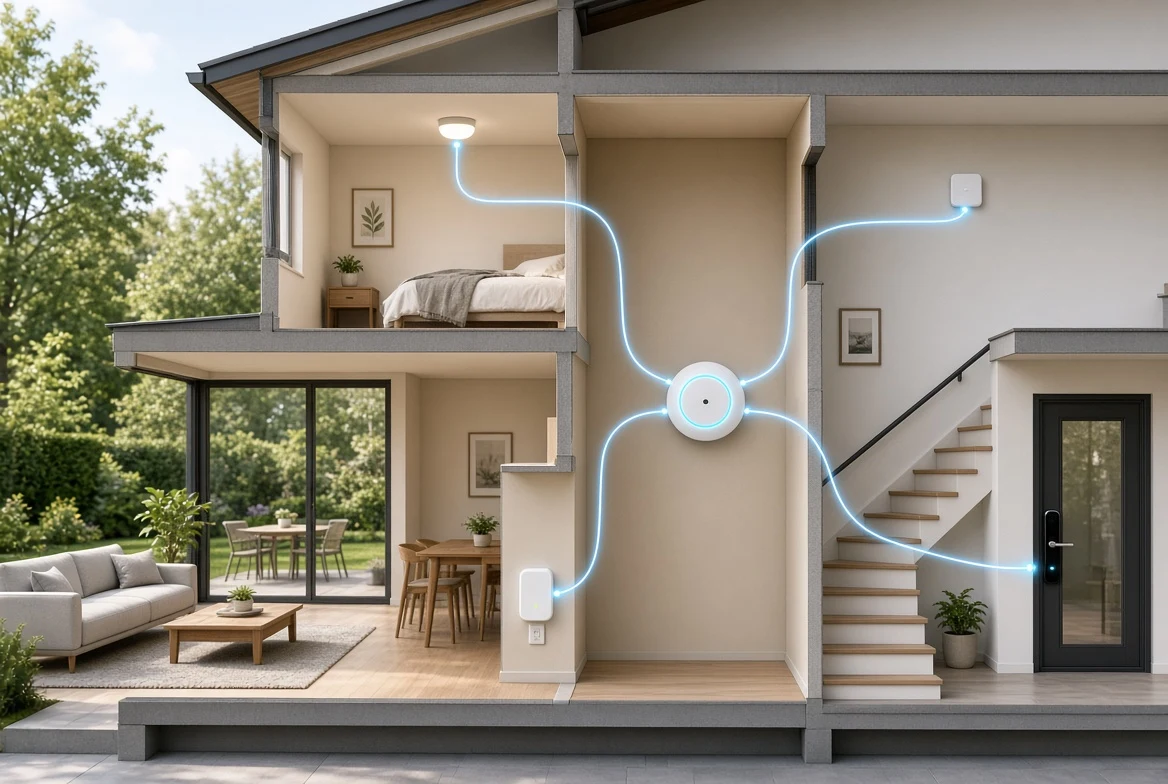
Building a smart home starts with the layers nobody sees. The walls, the wiring and the network plan outlive every gadget that hangs on them. Standards now cover the visible layer. The Matter spec, run by the Connectivity Standards Alliance, gives devices a common language over Wi-Fi and Thread. The hard part is the floor under that spec.
Two kinds of choices shape the project. Soft choices, like brands and apps, can be swapped in an afternoon. Hard choices, like switch boxes and cable runs, stay until the next remodel. A wise plan spends its care on the second kind. Standards, wiring and energy math decide more than any single gadget ever will.
The Wiring Layer
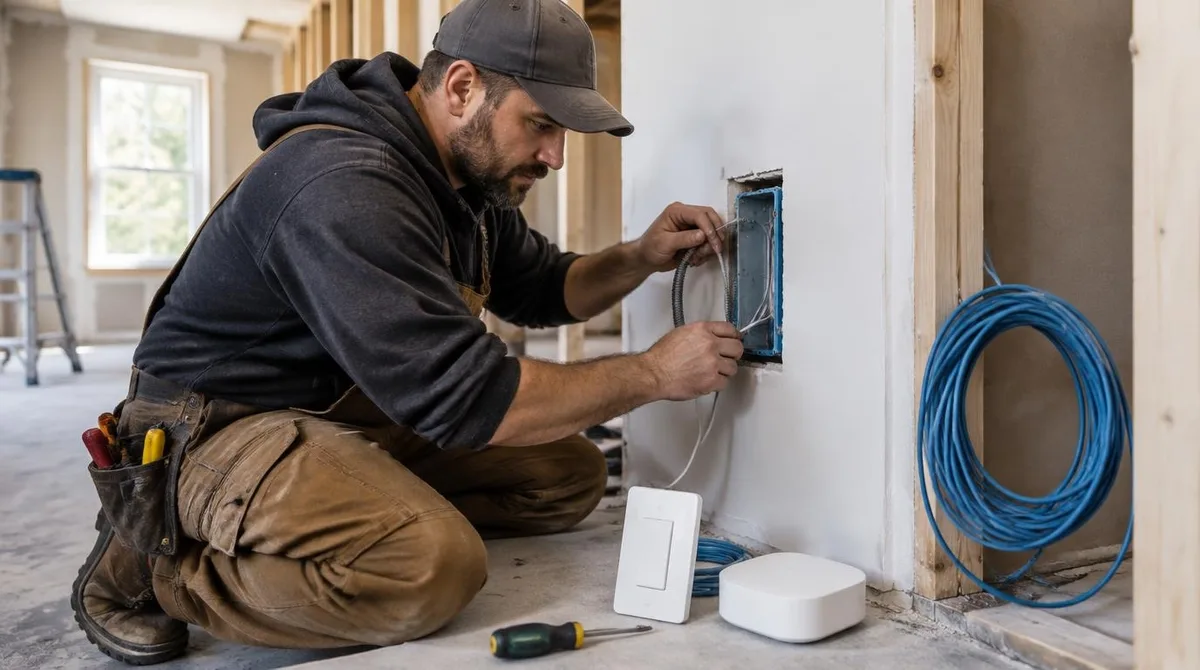
Put deep boxes behind every wall switch. Smart switches need room for radios and, in many homes, a neutral wire. Ask for spare conduit between floors and up to the attic. Wire for power at the eaves now if cameras might hang there later.
Think about power for the network closet too. A small shelf, one outlet and some airflow keep the gear cool and reachable. Builders who skip this end up with a router on top of a bookcase.
Building A Smart Home On Standards
The Matter mark is the anchor. It is open source, internet based, and backed by more than a thousand alliance members. Certified devices join any major platform with one pairing code. Building a smart home on that label keeps brand swaps cheap and resale value intact. We covered a connected angle in How To Set Up A Smart Home: Five Devices In Order.
Thread deserves a line of its own. It is the mesh radio that carries Matter between battery sensors and the hub. Each powered device extends the net. A spec plus a mesh means fewer dead corners later.
Power, Load And Energy Math
The federal floor matters here. The Department of Energy says its appliance rules cover more than 70 products. Those products account for about 90 percent of home energy use. Heating and cooling alone approach half the typical bill, over $900 a year. A certified smart thermostat claws back about 8 percent of that on average. Readers following this should also see Smart Home Automation: The Quiet Glue That Runs The Whole House.
Certified clothes washers show the same pattern. They use about 20 percent less energy and 30 percent less water than standard models, per ENERGY STAR. Gadgets do not create these savings. They just make the savings easier to keep.
Decisions That Are Hard To Undo
Ceiling fixture placement is one. So is the choice between smart bulbs and smart switches, since each shapes the wall plate for years. Cloud accounts are the sneakiest. A door lock tied to a dead service becomes a very dumb bolt. Favor local control, and keep an exit note for every account.
Bulbs travel well and die with the fixture. Switches stay put and run whatever bulb gets screwed in later. Pick switches for halls and kitchens, bulbs for lamps, and write the rule down before the painter arrives.
Security From The First Stud
NIST guidance for connected devices asks makers to ship unique passwords and timely updates, and buyers should demand both. Plan a closet for the hub and network gear, with power and cooling. Label the circuits that feed it. Boring details at framing time prevent midnight resets later.
The rebate finder at ENERGY STAR lists offers by zip code, which can soften the first bill. The federal floor sets the minimum, and the label marks the better buys above it.
Conclusion: What To Build First
The rule for building a smart home is simple: hard choices get the care. Build the spine first, with boxes, wires, radio coverage and a strong router. Hang certified devices on it one room at a time. Watch for Matter energy reports and new security labels, which will raise the floor again. The walls are patient. The standard is not.