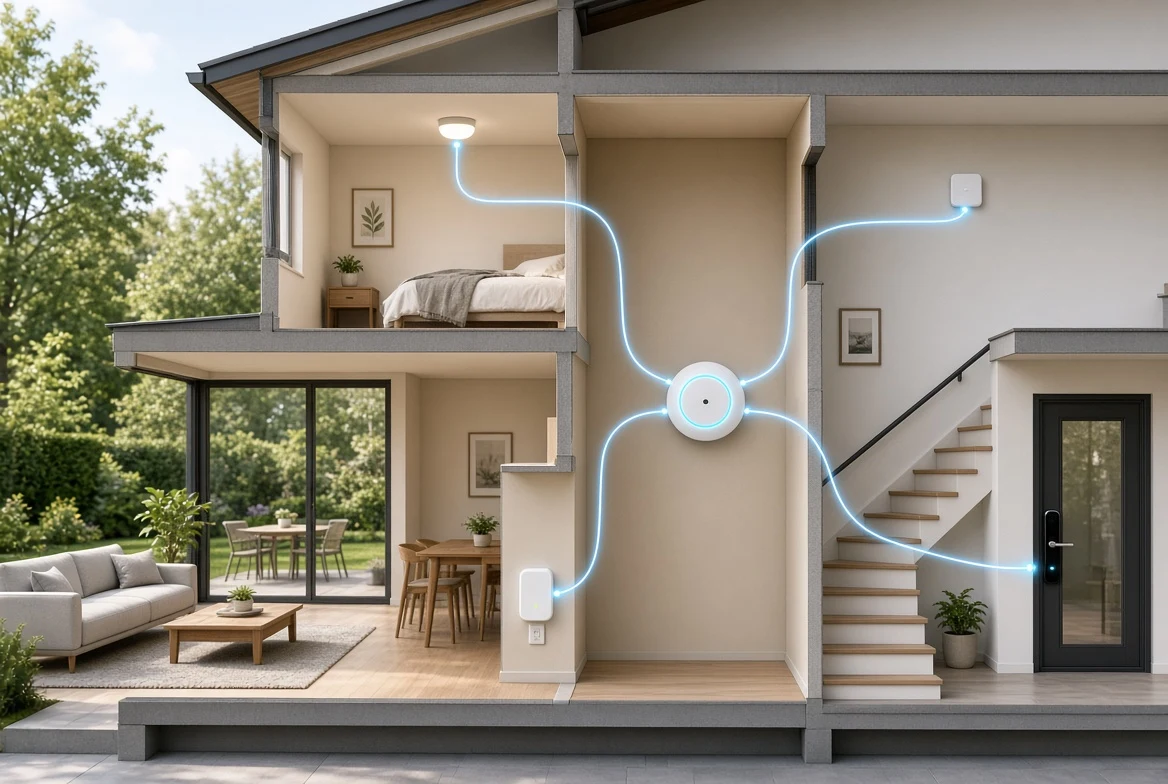
Smart home automation is the software layer that lets lights, locks, thermostats and speakers work together instead of fighting. The glue is not one brand. It is a shared language, called Matter, that runs over Wi-Fi and Thread radio. The Connectivity Standards Alliance keeps that language open, and its members include Amazon, Apple and Google. Any device that speaks it can join the same routines and scenes.
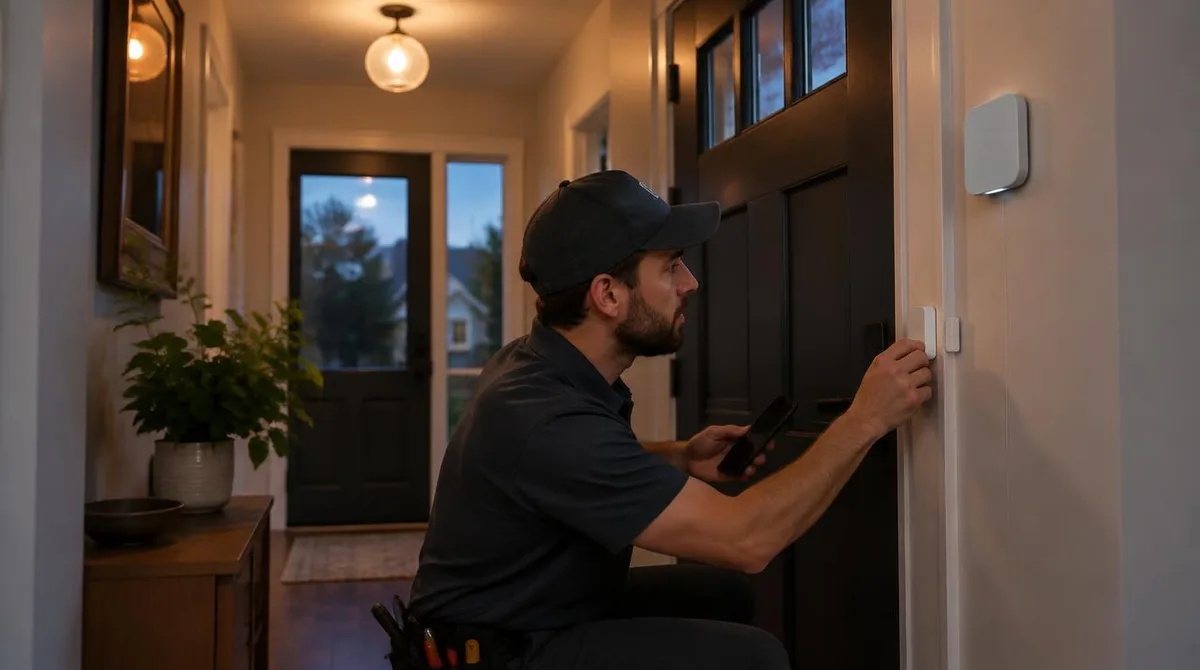
The real product is coordination. A door sensor can trip a hall light, arm a camera and nudge the heat down in one step. That shift, from apps to rules, is what changed. It also created a quiet cost. Lock-in is the price of leaving a system after it has grown deep roots in a house.
What Smart Home Automation Actually Is
Automation means rules, not remote control. A rule says: when the door opens after dark, light the hall. The devices run the rule themselves, with no phone in the loop. The old way tied every gadget to its own app and cloud. The new way needs one shared language plus one place that stores the rules.
Matter, run by the Connectivity Standards Alliance, is that shared language. It is open source and internet based, and it rides on Wi-Fi and Thread. The alliance counts more than a thousand members and thousands of certified products. That scale is why the glue finally holds.
Why It Arrived Now
Three things landed at once. Radios got cheap, so a Thread chip adds little to a bill. The big platforms grew tired of support wars, so they backed one standard. Regulators also began asking hard questions about device security, which pushed firms toward common ground.
Battery devices matured as well. Thread lets sensors sleep for years on one coin cell, so automation stopped needing wiring. Homes filled up quietly, one sensor and one bulb at a time, until the rule layer became the norm.
What The Glue Changes
Smart home automation stops being a gimmick when rules cross brand lines. One scene can dim one maker's bulbs, lock another's deadbolt and set a third firm's thermostat. Voice stops being a tiebreaker, because every major assistant speaks Matter. Setup shrinks too, since one pairing code joins a device to the whole home. For related coverage, see Smart Home Installation: What A Professional Crew Actually Covers.
The hub question also gets simpler. Automation needs one box, or one small stick, that holds the rules and speaks Thread. If that controller dies, the rules move to a new one, not to the trash.
The change reaches guests too. A temporary code can grant access for a week, then expire on its own. Hosts hand out doors instead of keys. Small features like these explain why the category stopped being a hobby.
The Lock-In Cost
The glue is open, but clouds are not. Many devices still ship with a required account and cloud features that die when a server shuts down. A camera that stops recording because a firm closed a desk is lock-in in its purest form. Smart home automation works best when its rules outlive any single vendor. Favor devices with a local option and the Matter label, and keep a list of what each cloud account holds.
Security is the other quiet bill. The Federal Trade Commission tells owners to start with the router: change default logins and keep firmware fresh. A strong front door counts for little when every window is a default password.
Support windows matter as much as clouds. Firms publish how long a device will get security fixes, and short windows turn bargains into junk on a schedule. Check that date before any hub or camera lands in a cart.
Conclusion: Watching The Automation Layer
The smart home automation layer is still young. Watch for Matter energy reports, which let meters and appliances trade numbers. Watch for security labels that make safe devices easy to spot. The glue is thin now, but it is spreading. The lock-in risk shrinks with each certified device on the shelf. We covered a connected angle in The Smart Home Installer Trade: Credentials, Quotes And Red Flags.