Researchers at the Virginia Tech Transportation Institute are testing a system that spots large animals near the road with thermal cameras and AI software, then warns drivers in real time on digital signs. In a year-long pilot, it detected large animals 97% of the time, and drivers slowed by about 3 mph at the signs — figures reported by WDBJ, citing the institute, with no independent corroboration yet.
The guide below explains how the system works, what the pilot actually proved, and what it would take to put one on a road near you. It also covers the cost side, because in southwest Virginia the repair bills are already climbing. We covered a connected angle in Smart Home Installation: What A Professional Crew Actually Covers. We covered a connected angle in Smart Home Installation: What A Professional Crew Actually Covers.
Why Virginia roads need an early warning system
Deer collisions are not a rare event in the counties where the system is being tested. Kin Jennelle, manager of Collision Plus, a body shop, told WDBJ that deer claims used to follow the seasons. Now the shop sees three or four deer claims a week, up from one or two. Readers following this should also see States Shift From Buying Ed-Tech to Demanding Proof It Works.
The bills have grown too. A typical claim has risen from a range of $1,500 to $3,000 to between $2,000 and $8,000, and repairs take three to 15 days depending on severity. Jennelle said many drivers never see the animal at all.
Residents notice the pattern. Laura Goodrich, a Claytor Lake resident, told WDBJ she has a deer run out in front of her about once a year. "They come right out of the forest and they're there," she said. The risk peaks during the rut, the fall mating season, when bucks chase does across roads without looking.
How the thermal camera and AI system works
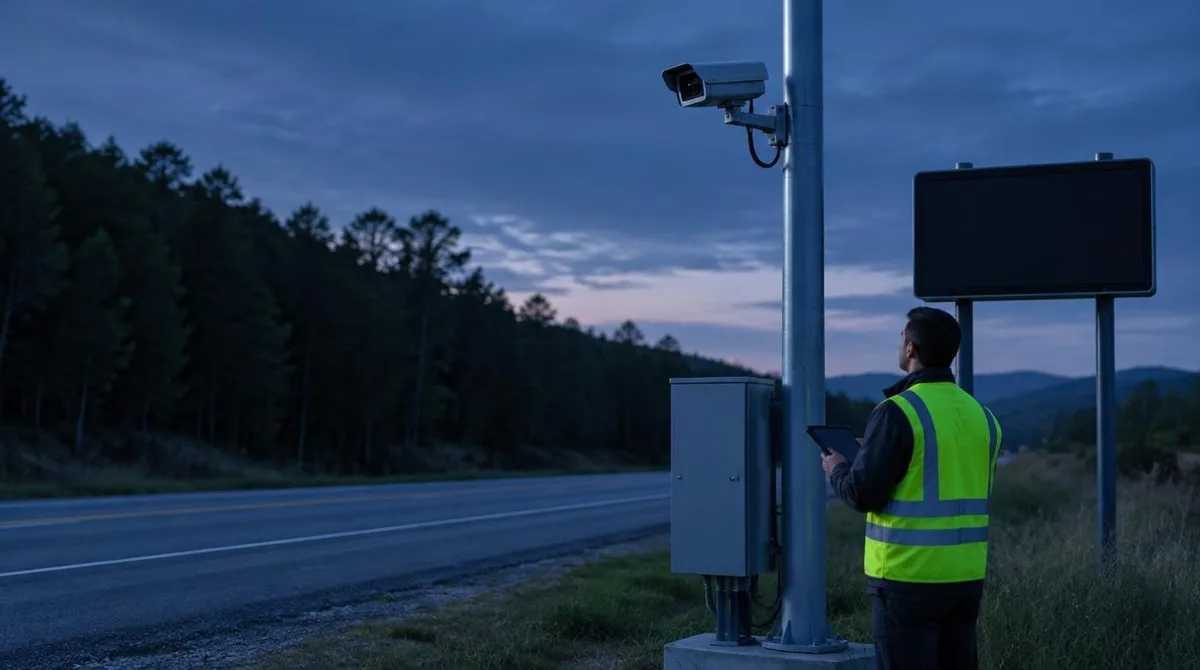
The setup is simple to describe and hard to run. Thermal cameras watch a stretch of road and capture heat signatures, not images of license plates or faces, according to Talledo Vilela. AI software reads those heat patterns and decides whether a large animal is near the road. When it is, digital signs light up to warn approaching drivers.
The AI part is the same family of software that powers other detection tools; readers who want the broader context can follow how AI systems learn to spot patterns humans miss. Roadside detection is a specialized case: the software must tell a 700-pound elk apart from a cow, a person, or a hot patch of pavement, at highway speed, in fog and rain.
What the year-long pilot proved
The pilot ran on Route 460 in Buchanan County and focused on elk, though the institute says the cameras are trained for deer as well. Jean Paul Talledo Vilela, a research scientist at the institute, said the system can warn drivers about deer the same way it warns them about elk.
The measured results, as reported by WDBJ:
- Detection: large animals were detected 97% of the time.
- Speed: drivers slowed by about 3 mph at the signs, measured as they entered the corridor. Talledo Vilela said drivers may slow more once inside, and analysis is ongoing.
- Context: speeds through the corridor range from 55 to 65 mph, and hitting a 700-pound animal at that speed "would be very, very bad," he said.
Three mph sounds small. But at 60 mph, a few miles per hour buys extra reaction distance, and the warning arrives before the animal is visible at all. That is the point of the design: standard signs get ignored, Talledo Vilela said, so these messages were built to get attention.
Who benefits first, and who waits
The system has been tested only in Buchanan County. Rural roads with heavy animal traffic and few streetlights are the clear first candidates. Drivers who commute those corridors at dawn and dusk, and during the rut and hunting season, when Jennelle says hunters are pushing deer around, gain the most.
Everyone else waits on two practical problems. The institute is working through rural power and limited internet service, the unglamorous plumbing that decides whether the system can run anywhere in Virginia. The team is also considering static signs inside the corridor for drivers who miss the first message.
"We learned a lot. They will allow us to provide a robust solution to any location within Virginia State," Talledo Vilela said.
What it costs, and the honest open question
What is documented is what a crash costs without a warning system: $2,000 to $8,000 per claim in one Virginia shop, plus three to 15 days without the vehicle.
The open question is behavioral. A 3 mph slowdown at the sign is real but modest, and the deeper analysis of how drivers behave inside the corridor is still underway. If the full data shows drivers slow much more once warned, the case for wider deployment writes itself. If it does not, the hardware will have proven it can see deer, and the harder problem will be convincing 60-mph drivers to care.