Smart home appliances are washers, dryers, fridges and ovens with a radio and an app attached. The radio adds remote start, cycle alerts and energy tracking. It also adds a cloud account, a support clock and a new way for a working machine to fail. Both sides of that ledger deserve a look.
The efficiency floor under the features is official. The Department of Energy sets standards for more than 70 products that cover about 90 percent of home energy use. Connectivity rides on top of that floor. It does not replace it.
What Connectivity Actually Adds
The useful features are few and real. Delay start that chases cheap power hours. Alerts that end the rewashing of forgotten loads. Diagnostics that shorten repair visits. Remote kill switches for the iron era of worry, applied to ovens and dryers.
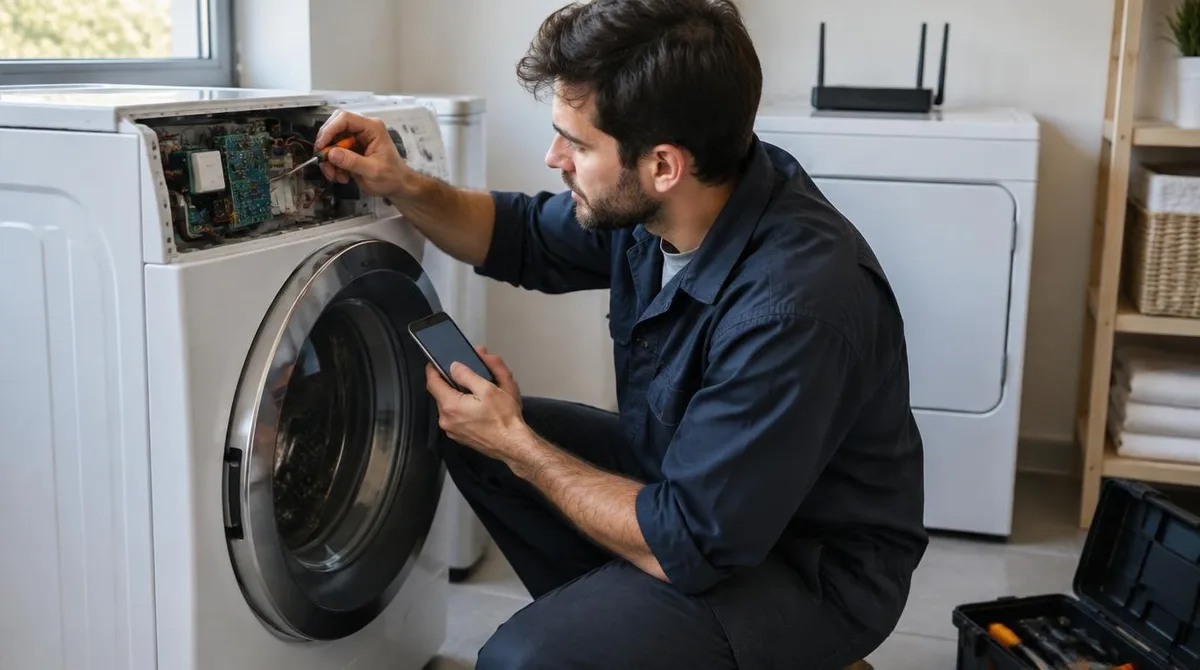
Diagnostics deserve more credit than they get. A washer that reports its own error codes turns a service call into a part order. Fewer truck rolls mean cheaper repairs and faster fixes.
The rest is theater. Fridges with screens stream news that phones already stream. Voice controlled ovens mostly answer back. The appliance is a tool with a motor, and the app rarely changes that.
The Efficiency Floor Beneath The Features
Labels still do the heavy lifting. ENERGY STAR certified washers use about 20 percent less energy and 30 percent less water than standard models. Certified fridges run about 9 percent more efficient than the federal minimum. An old fridge can cost about $95 a year to run, and no app fixes that.
Those certified washers save about $530 in energy costs over their life. Each cycle uses about 14 gallons instead of 20. Heat pump dryers are next in line for the same treatment. The floor keeps rising, one rule at a time.
Rebates tilt the floor further. The ENERGY STAR rebate finder lists offers by zip code, and bundles of appliances often qualify together. The sticker price is only the opening bid.
What Smart Home Appliances Quietly Cost
Smart home appliances carry costs the price tag hides. A cloud shutdown can strand features, and makers have retired connected services while the machines still washed. Every app wants an account, and every account wants data. The Federal Trade Commission treats weak security on connected devices as a real hazard, not a footnote. We covered a connected angle in Smart Home Sensors: Every Type And What Each One Detects.
Firmware support ends years before the motor does. A washer can run fifteen years; its app may get five. Buyers should check the support window the way they check the drum size.
Data collection is the quietest cost of all. Usage patterns reveal schedules, and some apps share more than owners expect. Reading the privacy screens takes ten minutes and prevents a year of shrugs.
Repair, Software And Lifespan
Repairability bends under the electronics. A failed control board now costs more than a transmission once did, and software locks can block third party fixes. The right to repair movement is chewing on exactly this problem, slowly.
Simple questions help at the store. Does it work without the app? Does the maker publish an update policy? Are parts drawn on the standard diagram? Honest answers predict the decade better than the spec sheet. A local dealer with parts knowledge beats a chat window at midnight.
Warranty terms spell out the software promise in fine print. Coverage that excludes connected features leaves the app tier unsupported. That gap widens every year the machine outlives its code.
Conclusion: The Next Load
The next chapter ties appliances to the meter. Matter energy reporting will let the dryer see the power price, and rebate programs will pay for the swap. Smart home appliances earn their radio when the connection saves energy, not when it just reports status. Watch the labels and the meters, not the screens. Readers following this should also see Smart Home Installation Services: Reading The Market And Every Quote.