Smart home installation services sell outcomes, not boxes. The good ones deliver a network that holds. Devices pair to one app, and the rules survive a power cut. The market behind that promise is wide and uneven, from big retail crews to one person shops. Reading it well saves both money and walls.
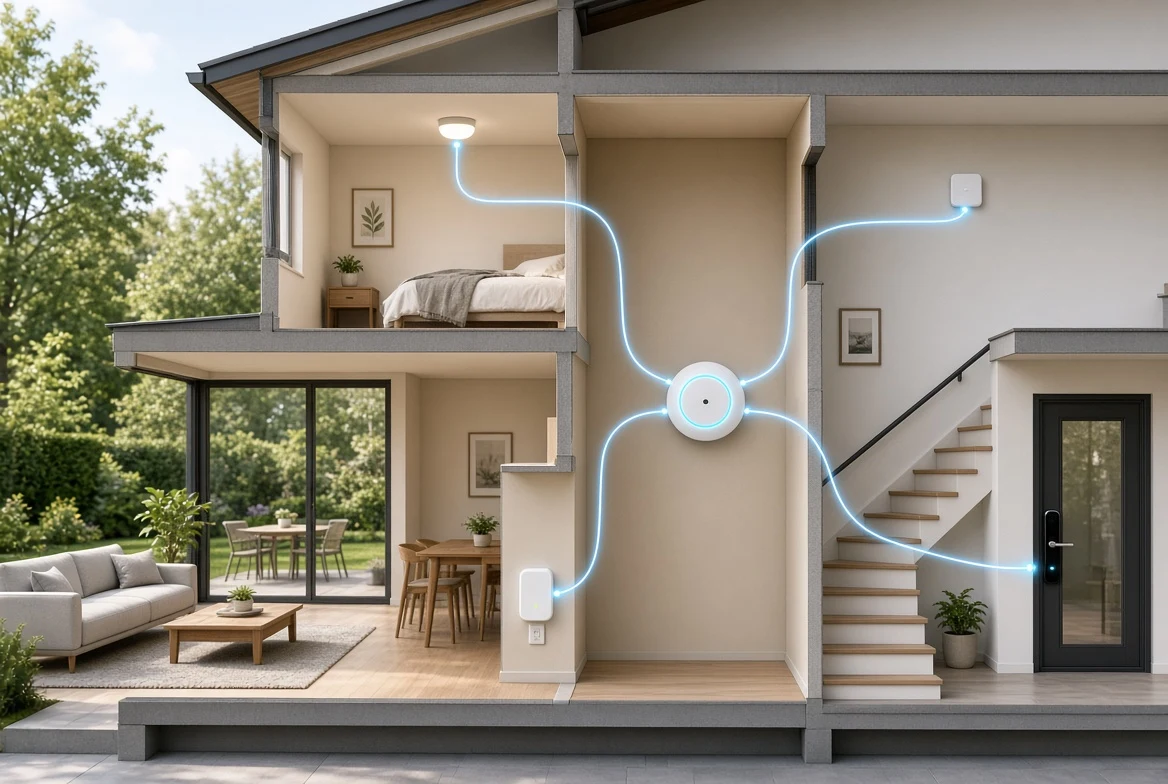
The frame to demand is the open standard. Devices marked Matter, from the Connectivity Standards Alliance, work across platforms. The service cannot strand a house in one brand. Services that skip the standard are selling a subscription to themselves.
What Smart Home Installation Services Sell
Most packages bundle three things. Gear comes at retail plus a markup. Labor is billed by the hour or the room. Programming time covers scenes and schedules. Support after day one is either bundled or missing, and that single line decides the real price.
Cheap flat packages cover pairings and basic scenes. Premium tiers add network hardware, wall panels and multi room audio. The honest middle covers the wiring, the router and a year of callbacks.
Bundling hides margin. Gear marked up twice, labor padded for weather and programming billed by the scene all look normal on one page. Separate lines let each part be shopped.
Mapping The Market
Four tiers sell the work. Retail chains bolt installs onto device sales. Security dealers lead with monitoring contracts. AV integration firms build high end systems. Independent pros sell range and speed. Each tier quotes the same house differently, and the spread is often two or three times.
Tiers also differ in what happens after the sale. Retail crews vanish at the door. Dealers keep a monitoring relationship. Integrators answer the phone for years at a price. Match the afterlife to the household, not just the install day. Insurance certificates travel by email within a day, and slow ones say plenty.
The efficiency side has official numbers too. Heating and cooling run near half the typical bill, over $900 a year, per ENERGY STAR. Services that skip efficiency leave the biggest line item alone.
What Every Quote Should Include
A complete quote names model numbers, labor hours, programming time and the support window. It states who owns the cloud accounts and who holds the admin password. It lists the warranty on labor, which rarely matches the device warranty. A smart home installation services contract covers all five lines, or it covers none. We covered a connected angle in The Smart Home Installer Trade: Credentials, Quotes And Red Flags.
Security scope belongs in writing too. The Federal Trade Commission expects default logins changed and firmware kept fresh. A service that treats that as extra work has misread the job.
Dates matter as much as lines. A start window, a finish window and a daily cleanup clause all belong in writing. Together they keep a two day job from becoming a two month guest.
Rebates And The Real Price
Efficiency money changes the math. The ENERGY STAR rebate finder lists offers by zip code. Certified smart thermostats carry verified savings of about 8 percent of heating and cooling costs. A service that will not fill rebate forms is leaving paperwork money behind.
Bundles of thermostats, washers and heat pump dryers often qualify together, and the paperwork is the same size either way. A quote that ignores that stack is written too fast.
Real prices also include change orders and service calls. Ask what wall fishing costs when it goes badly, and what a service visit costs in year two. Those answers predict the invoice better than the headline number.
Conclusion: Signing With Open Eyes
Smart home installation services will keep consolidating as Matter shrinks the labor in each job. Watch for flat national pricing, security labels on gear lists and rebate handling as a standard line item. The quote that survives all five checks above is the one worth signing. The market will keep sorting itself by how honestly it itemizes. Readers following this should also see Smart Home Installation: What A Professional Crew Actually Covers.