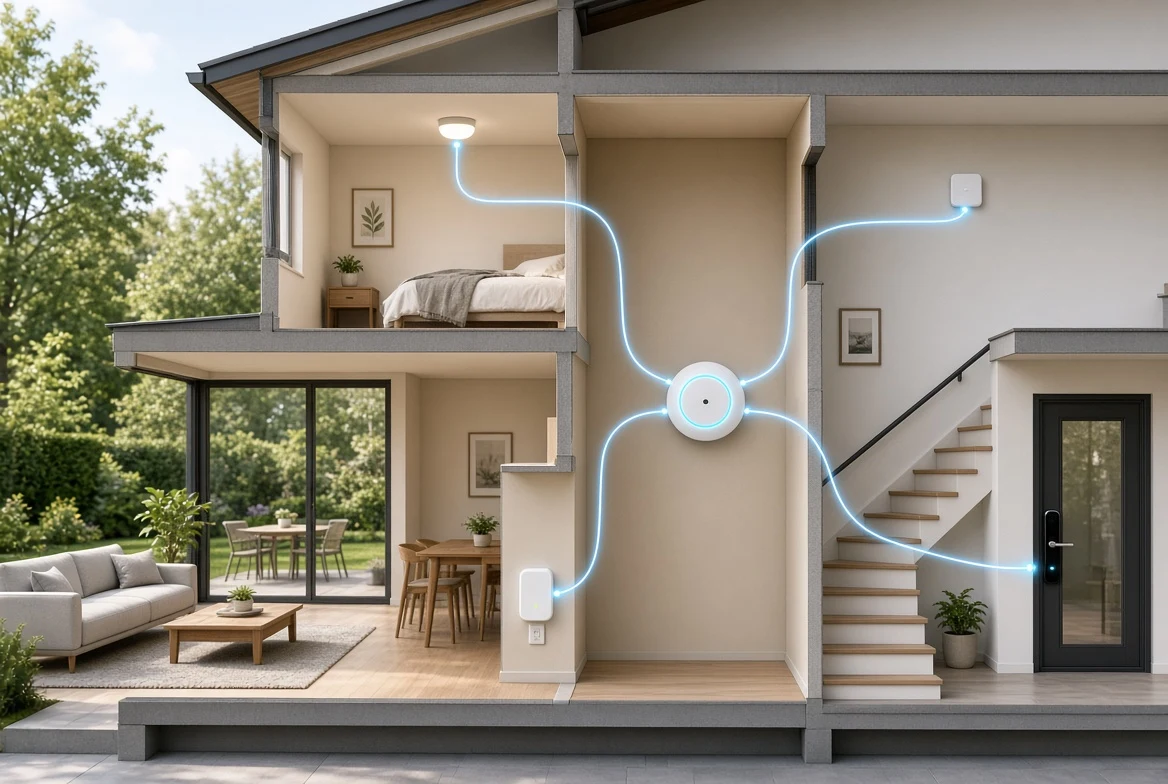
Smart home energy management is the layer that watches, measures and steers a house's power use. It starts with monitoring: a thermostat log, a smart plug readout or a sensor clamped on the main panel. The point is not data for its own sake. The point is finding waste that a monthly bill can hide.
The savings are real but modest at the core. ENERGY STAR certifies smart thermostats on real field data. The figures hold steady: about 8 percent of heating and cooling costs, or roughly $50 a year. Heating and cooling run near half the typical bill, over $900 a year, so the slice is worth trimming.
What The Monitoring Layer Sees
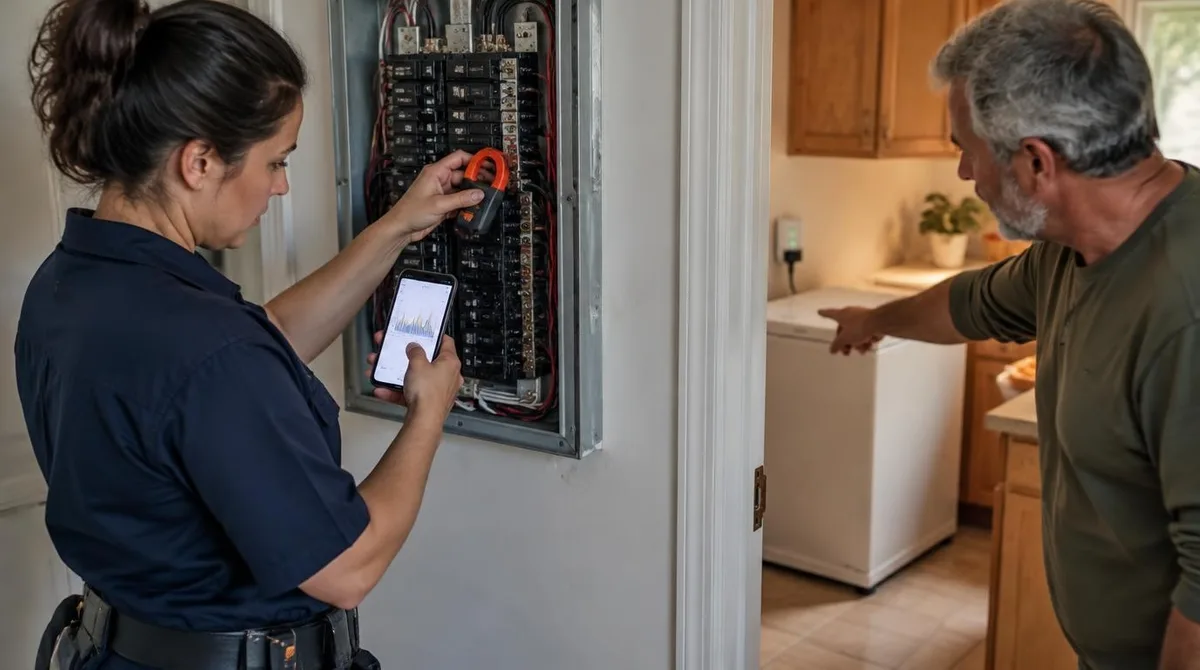
Three tools do most of the watching. Smart plugs report single devices, which settles arguments about old freezers. Circuit level monitors sit in the panel and split the house into lines. The thermostat itself logs runtimes and hold patterns. Each layer answers a different question, from one bad appliance to whole house drift. Readers following this should also see Smart Home Automation: The Quiet Glue That Runs The Whole House.
The Department of Energy frames the stakes. Its appliance rules cover more than 70 products, and those products account for about 90 percent of home energy use. A monitor cannot change that floor. It can show which machines sit far above it.
The Eight Percent Thermostat Math
The certified thermostat is the one device with a verified number. ENERGY STAR bases its 8 percent claim on real homes, not lab benches. The savings come from schedule learning, setback automation and occupancy sensing. Bigger homes and harsher climates see bigger returns.
This is the anchor of smart home energy management: one verified number the rest can build on. Timing adds more when rates vary. Many power plans charge more at peak hours. A managed home can shift dryer loads or car charging to cheap windows. That shift needs no new hardware, only a schedule and a clock. This connects to our earlier piece, How To Set Up A Smart Home: Five Devices In Order.
Where Smart Home Energy Management Pays Fastest
Smart home energy management pays fastest where loads are big and dumb. Pool pumps, electric water heaters, basement freezers and space heaters all draw hard and run blind. A thirty dollar plug that finds one forgotten heater can pay for itself in a season.
Water heaters and pool pumps round out the list. Either load can run on a schedule once it is measured, and neither needs a new machine to start saving. The meter finds the waste, and the schedule quietly removes it.
Old refrigerators are the classic catch. ENERGY STAR notes a dated fridge can cost about $95 a year to run. Certified new models run about 9 percent more efficient than the federal minimum. The monitor turns that math from a guess into a decision. The ENERGY STAR rebate finder adds offers by zip code on top.
What Monitoring Cannot Fix
No layer of data fixes bad insulation, a failing heat pump or single pane glass. If heating runtime climbs every winter, the sensor is the messenger, not the cure. Owners who expect the app to seal the attic will be disappointed.
Coverage also has limits. Plug meters miss hardwired loads, and panel sensors guess at which line is which. Treat the numbers as a trend line, not a meter grade audit.
Real homes drift, so the numbers need a glance now and then. A weekly look at the runtime chart catches stuck dampers and open windows before the bill does. Management, not just measurement, is where the savings live.
Conclusion: The Grid Next Door
The next chapter is two way. Matter energy reporting will let appliances talk to the grid, and time of use rates will reward homes that listen. Watch for thermostats that bid, batteries that arbitrage and dryers that wait for cheap power. Smart home energy management has moved from reading the bill to shaping it.