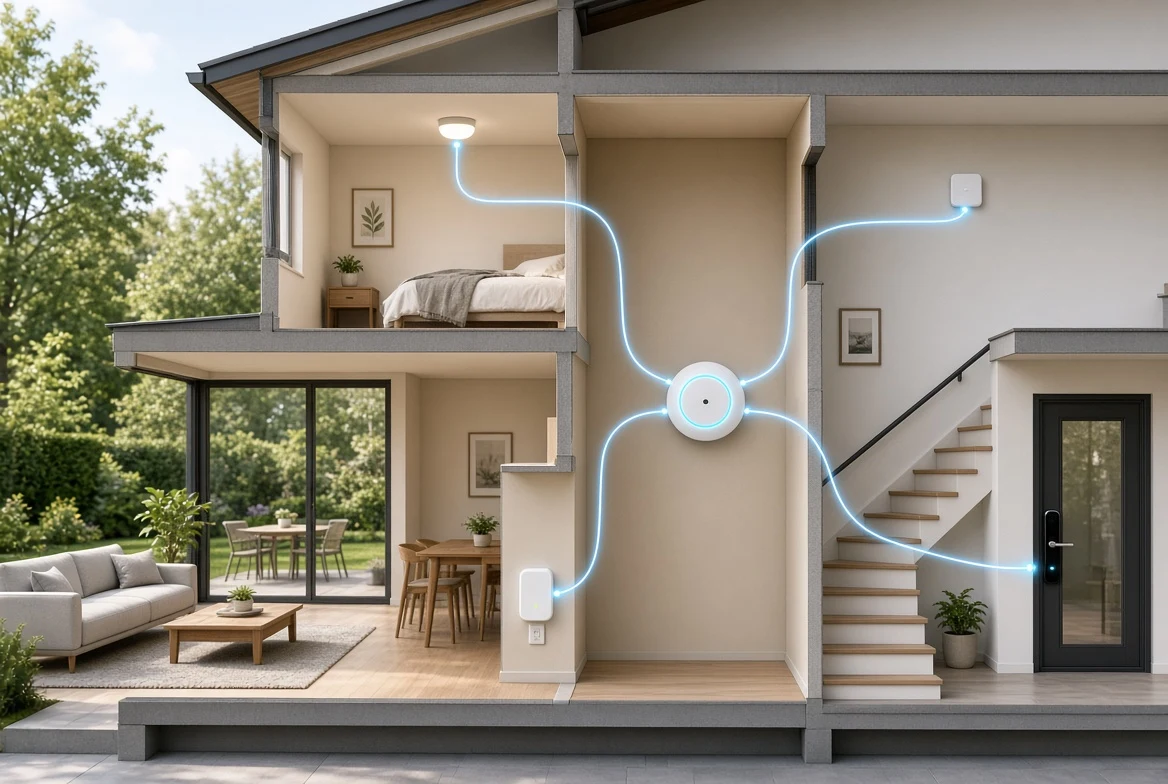
The best smart home hubs are not ranked by brand but by protocol loyalty. A hub is a translator and a rulebook. The real questions are which radios it speaks and whether its rules run locally. What happens when its maker has a bad quarter matters just as much. Loyalty to a protocol beats loyalty to a logo.
Matter, run by the Connectivity Standards Alliance, reset the field. It rides on Wi-Fi and Thread, and its devices join any major platform with one code. The alliance behind the standard counts over a thousand members, which is why the mark travels so far. The hub race is now mostly a Thread race, with a few legacy radios still in the lanes.
How To Judge The Best Smart Home Hubs
Three checks sort the field. Radio count: Thread, Zigbee and Bluetooth on board. Processing place: rules that run on the box, not in a far cloud. Exit cost: whether devices and scenes survive a hub swap. A hub that fails the third check owns the house more than it serves it.
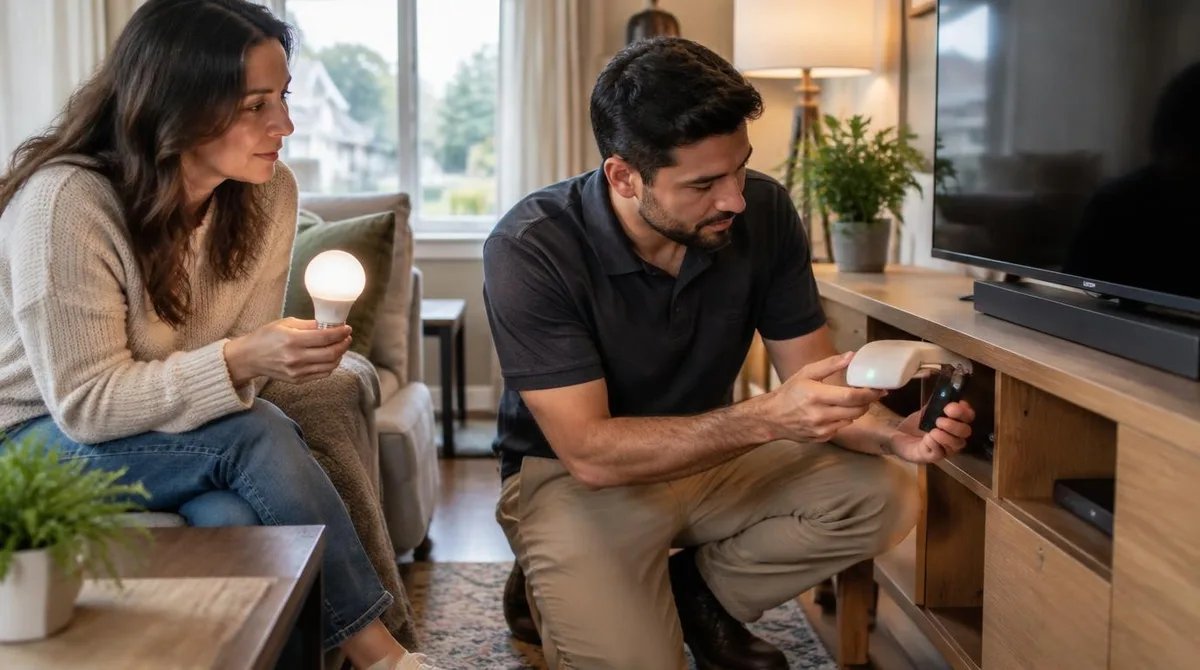
Form factor follows function. A stick hides behind a TV; a speaker adds voice; a rack hub adds ports and antennas. Pick the shape that matches where the mesh needs to live.
Compatibility lists age fast, so trust the mark over the matrix. A Matter certified device joins today; a promised update might never land.
The Thread Border Router Test
Every serious hub now doubles as a Thread border router. That is the piece that bridges the low power mesh to the home network. Speakers, sticks and even some routers carry the role now. One border router works; two add range and backup. We covered a connected angle in Smart Home Sensors: Every Type And What Each One Detects.
Backups matter more than benchmarks here. When the main border router reboots, a second one keeps the mesh talking. Range and patience, not speed charts, decide how a Thread home feels.
Powered Thread devices extend the mesh on their own. A hub planted in a far corner drags the whole net with it. Plant it central, high and away from metal.
Hubs That Stay Local
Local control is the quiet premium. A hub that runs scenes on the box keeps lights working through an internet outage, not just a power cut. Local also means faster: scenes fire in milliseconds instead of round trips. The Federal Trade Commission's router first guidance still applies, but local hubs shrink the blast radius. Lights that answer instantly feel wired; lights that think feel broken.
NIST guidance for connected devices pushes the same direction. Unique credentials, timely updates and a clear support window are the baseline. A hub that cannot name its update policy is a gamble with a plug on it.
The Multi Protocol Tangle
Legacy gear keeps the old radios relevant. Zigbee bulbs and Z Wave locks still serve millions of homes. The best smart home hubs carry those radios alongside Thread, or they politely decline the job. Readers following this should also see The Smart Home Installer Trade: Credentials, Quotes And Red Flags.
Two boxes beat one bad compromise sometimes. A legacy bridge for the old fleet and a Thread hub for the new one divide the work cleanly. Chasing every radio in one box costs more than two clean ones.
Brand bridges muddy the water with account requirements. Count the accounts before counting the radios; each one is a small promise to a server.
Conclusion: One Box Or Two
The field will thin out as Thread spreads through speakers and routers. Watch for hubs that publish support windows the way phones do. Watch for Matter energy work that gives the box a new job. The best smart home hubs will be the ones easiest to leave. Loyalty to the protocol, not the plastic, is the habit that ages well. One box or two, the exit stays open either way.