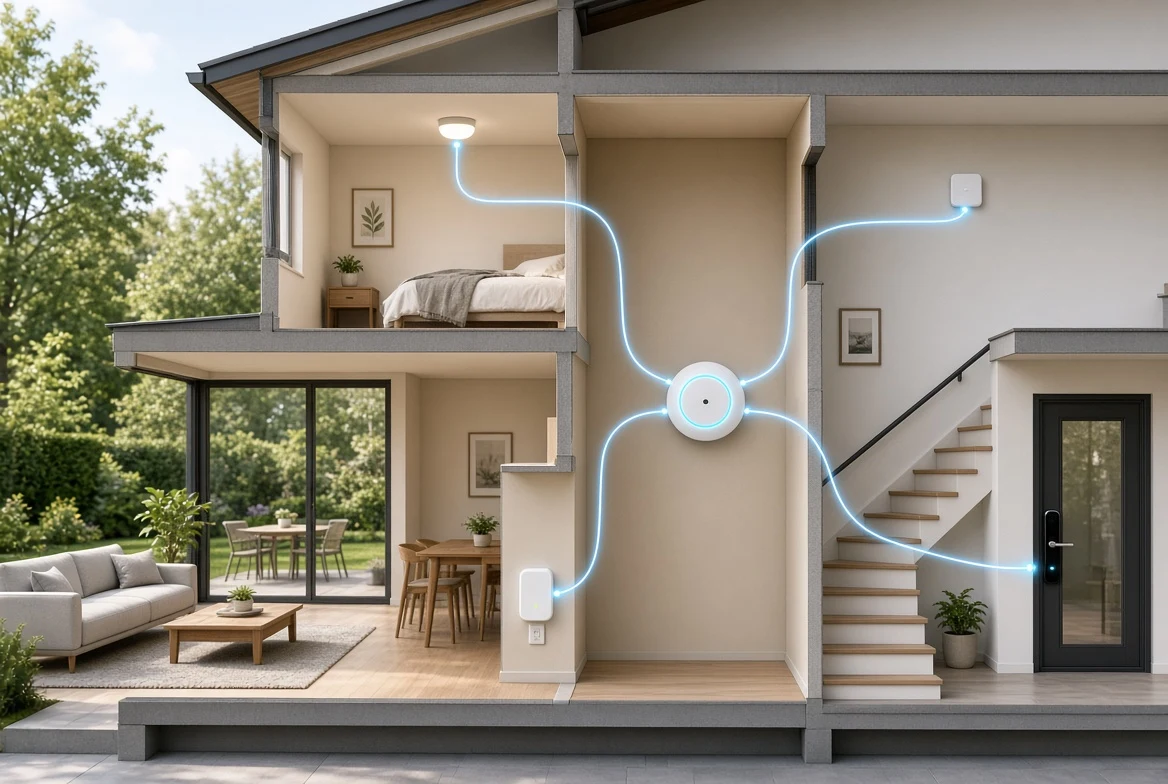
Smart home sensors are the nerve endings of an automated house. Each type answers one narrow question: is the door open, is the air bad, is the floor wet. The rules engine turns those answers into action. A good stack starts with cheap sensors, not fancy screens.
Most sensors now speak Thread or Wi-Fi through the Matter standard, run by the Connectivity Standards Alliance. That common language matters less for the sensor and more for what it triggers. A two dollar part can still command a thousand dollar system. Battery life runs years on a Thread mesh, so the nerve endings stay quiet until needed. Matter device types keep the meanings standard, so a leak reads as a leak everywhere.
Contact Sensors: The Open And Shut Case
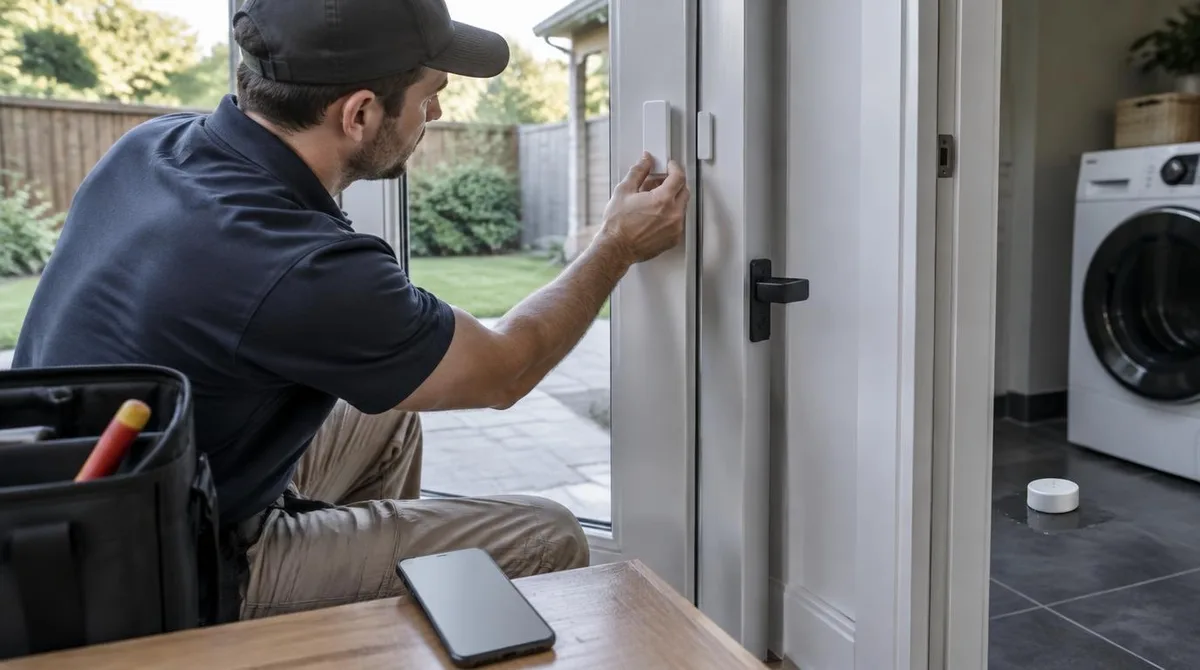
Contact sensors are two magnets and one radio. One half rides the door or window frame; the other rides the moving part. When they part, the sensor speaks. That single bit powers entry lights, alarm states and the quiet garage still open alert at bedtime.
Refrigerators and drawers take the same trick. A sensor on a freezer door catches the midnight snack that ruins the food budget.
Placement is the whole craft. Gap width, magnet strength and surface material all matter. Painted shut windows and steel frames cause the classic false reports.
Motion, Presence And The Pet Problem
Motion sensors detect change; presence sensors detect stillness too. Infrared units see moving heat, so a napping dog reads as furniture. Radar units read small motion, like breathing, at the cost of more false triggers.
Pets, curtains and heating vents are the classic culprits. Height and angle solve most of it. A sensor mounted to watch the doorway, not the sofa, stays quiet for years.
Curtains and heat vents fool infrared units too. A vent aimed at a sensor reads as a ghost. Small moves in placement buy big silence.
Occupancy data also feeds the thermostat. Rooms with people get air; empty rooms wait. That handoff is where sensors quietly pay for the hub.
Air, Smoke And Water Watchers
Air sensors track temperature, humidity, carbon dioxide and volatile compounds. The numbers matter most in rooms with people and no airflow. Kitchen and nursery readings can drive fans and humidifiers on their own.
Water sensors are the cheapest insurance in the box. One puck under the water heater and one under the washer catch leaks early. A mop job beats an insurance claim every time. Smoke and carbon monoxide alarms now join the network and announce their room by name.
Placement rules are simple. Air sensors breathe at breathing height, not ceiling height. Smoke alarms follow the ceiling code, and water pucks go where the first drop would pool.
What Smart Home Sensors Cannot See
Smart home sensors report states, not causes. An open window at midnight is data; a teenager is context. Floods of alerts teach households to ignore alerts, which is worse than no alerts at all. Good naming helps: hall door reads better than sensor seven. Readers following this should also see Smart Home Installation Services: Reading The Market And Every Quote.
Battery reports count as health data of a sort. A sensor that dies quietly leaves a hole in the rules. Low battery alerts belong on the same list as leaks.
Security duties deserve a sober look too. The Federal Trade Commission warns that any connected sensor can leak what it hears. Change default logins, keep firmware fresh and favor devices that work locally.
Conclusion: The Sensor Trail
The trail leads toward fewer, smarter sensors. Radar units that count people by room are already shipping. So are air sensors that drive fans and water pucks that shut valves. Start with the cheap layer of smart home sensors and let the rules earn the fancy ones. Watch for Matter energy reports to give sensors a role in load shifting too. This connects to our earlier piece, The Smart Home Installer Trade: Credentials, Quotes And Red Flags.