A smart home light switch replaces the plain wall toggle with a small radio, a timer and a relay. It ranks as the cheapest first step into a connected home. It builds on a habit that already exists: touching the wall on the way into a room. Lighting sits in the smaller half of a typical power bill. Heating and cooling take nearly half of it, per ENERGY STAR. The switch earns its spot through control and schedule, not raw savings.
The category arrived at scale for a simple reason. Bulbs got smart first, but a bulb dies with its LED and moves with the lamp. A switch stays in the wall for decades and runs whatever lamp comes next. That permanence made the smart home light switch the default first buy. It also makes the failure modes matter more than the price tag. Rental tenants get a side benefit. A switch swaps back to a plain toggle at move-out, with no bulb left behind. For related coverage, see The Smart Home Control Panel: Wall Screens That Replaced The Switch.
The Wiring Decides Everything
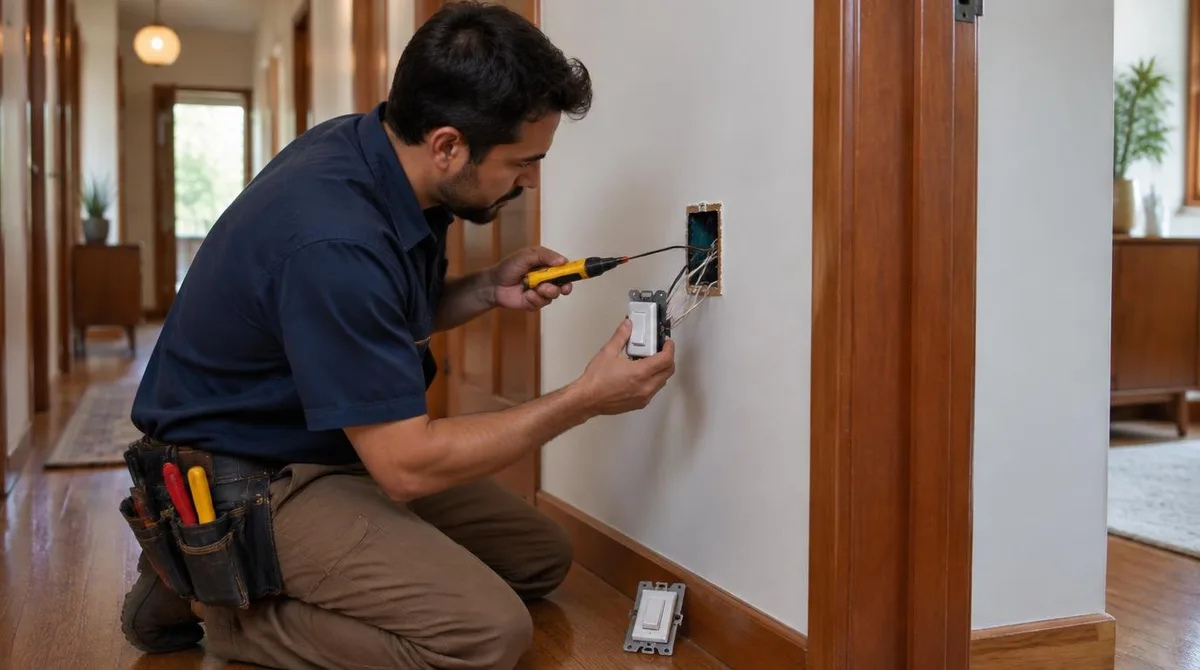
Most homes built before the 1980s lack a neutral wire in the switch box. Smart switches need that wire to feed their radios, so older boxes force a choice. No-neutral models fill the gap, at a cost in load range and bulb type. Three-way circuits, where two switches run one light, add a second layer of matching parts. A voltage tester settles the wire question in a minute.
The breaker comes first, and the box depth comes second. A smart home light switch packs a radio, an antenna and a relay into the old toggle space. Deep boxes take the new body with room to spare. Shallow boxes fight it, and crowded boxes invite loose wire nuts.
What a Smart Home Light Switch Actually Does
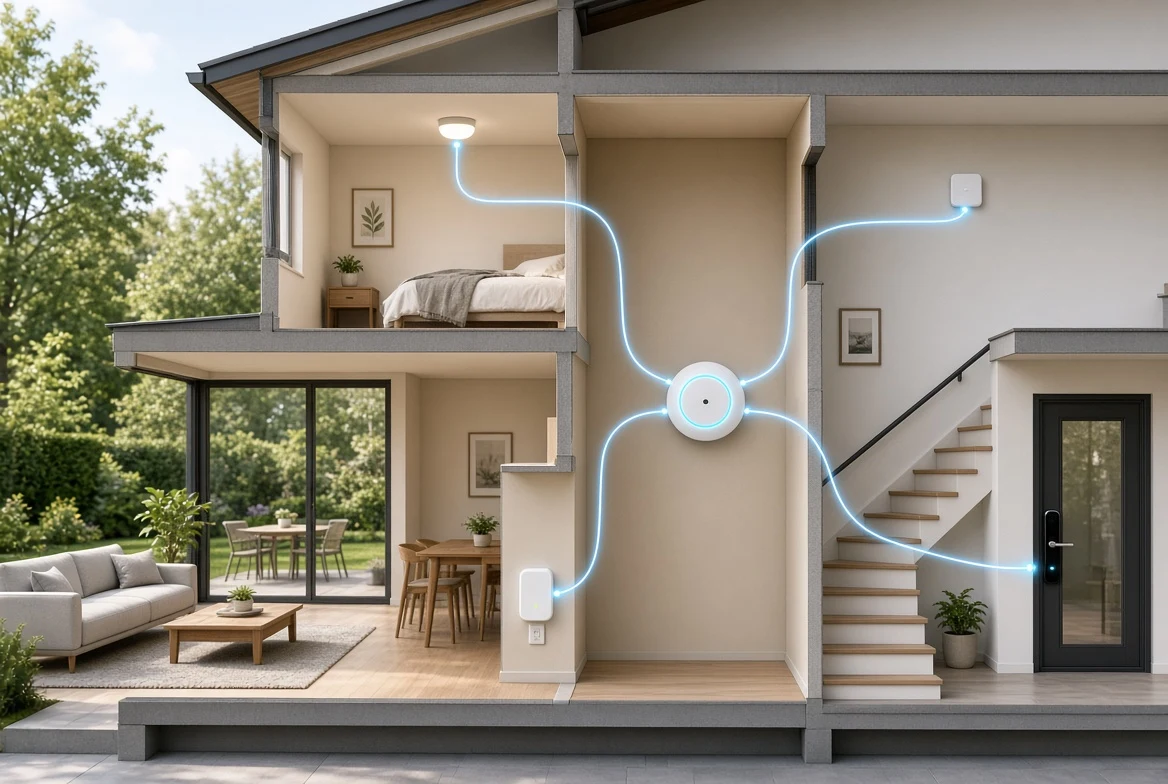
Inside the plate sit three parts. A relay opens and closes the circuit. A radio takes commands. A schedule chip keeps time when the network drops. The Connectivity Standards Alliance runs the Matter protocol. Matter devices ride on Wi-Fi and Thread network layers, with Bluetooth used only for setup. That stack decides which hub, if any, the switch needs.
Remote control is a feature of the radio, not the switch itself. The relay stays wired in series with the light. The wall button keeps working during a network outage. The radio only adds distant hands to a circuit that never lost its local ones.
Standards Behind the Wall Plate
Matter matters because it cuts the tie between the switch and its maker. A certified unit joins the major platforms without a brand bridge. The CSA lists local control and reliability as core goals. A smart home light switch with the Matter logo also carries a listing mark from a testing lab. That safety listing comes first in the reading order. ENERGY STAR certifies thermostats and appliances. Wall switches have no federal label of their own. This connects to our earlier piece, Smart Home Appliances: What Connectivity Adds And What It Costs.
The Security Checklist
The Federal Trade Commission frames connected-device security as habits for makers and owners alike. Its Careful Connections guidance tells makers to build security in from the design stage. The same page says drop default passwords, require strong login and ship patches. Owners invert the list. Defaults get changed, firmware gets updated, and the network gets isolated when a flaw appears. A wall switch has more reach than a bulb. It sits inside the house wiring. A hijacked radio is quiet, so the update habit carries the load.
Conclusion: One Wall, Then the Next
The switch is a staging step, and a good one. It teaches the app, the schedule and the voice command. The circuit below still fails safe, back to a plain toggle. A smart home light switch is a small bet with a long service life. The spread of no-neutral models is worth tracking as brands chase older homes. So is the reach of Matter certification into budget lines. The wall plate, not the bulb aisle, is where the connected home quietly starts.