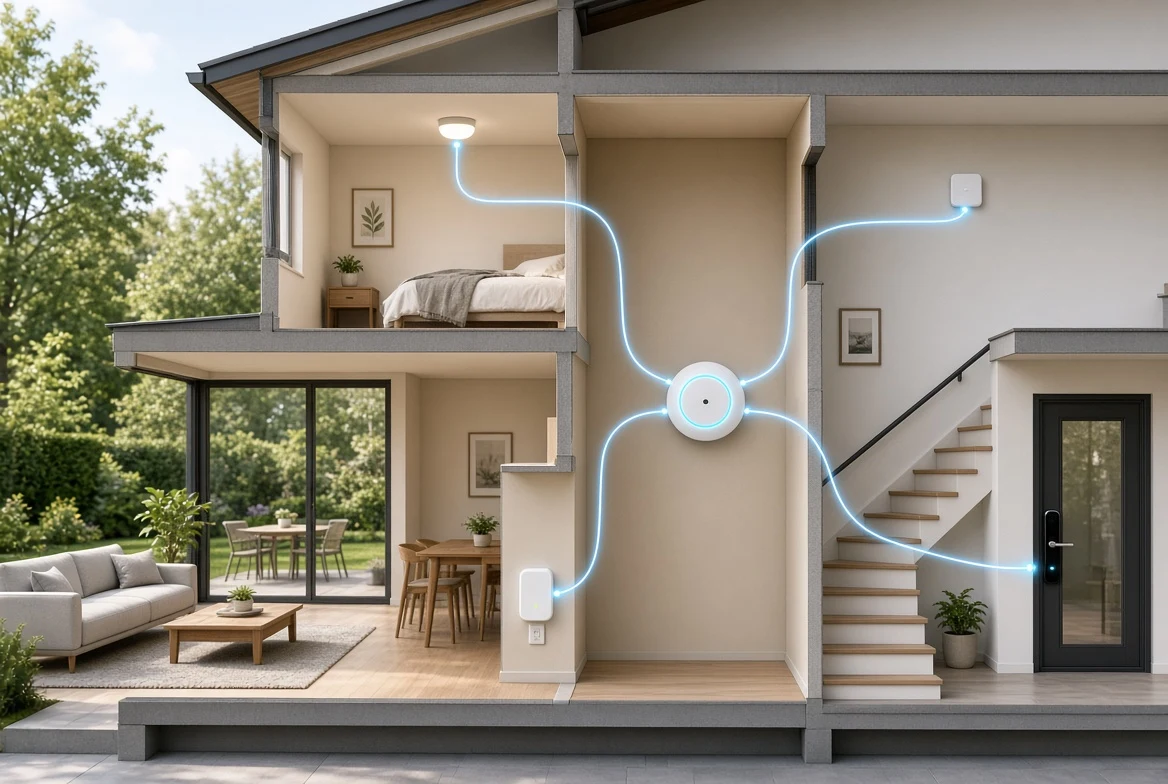
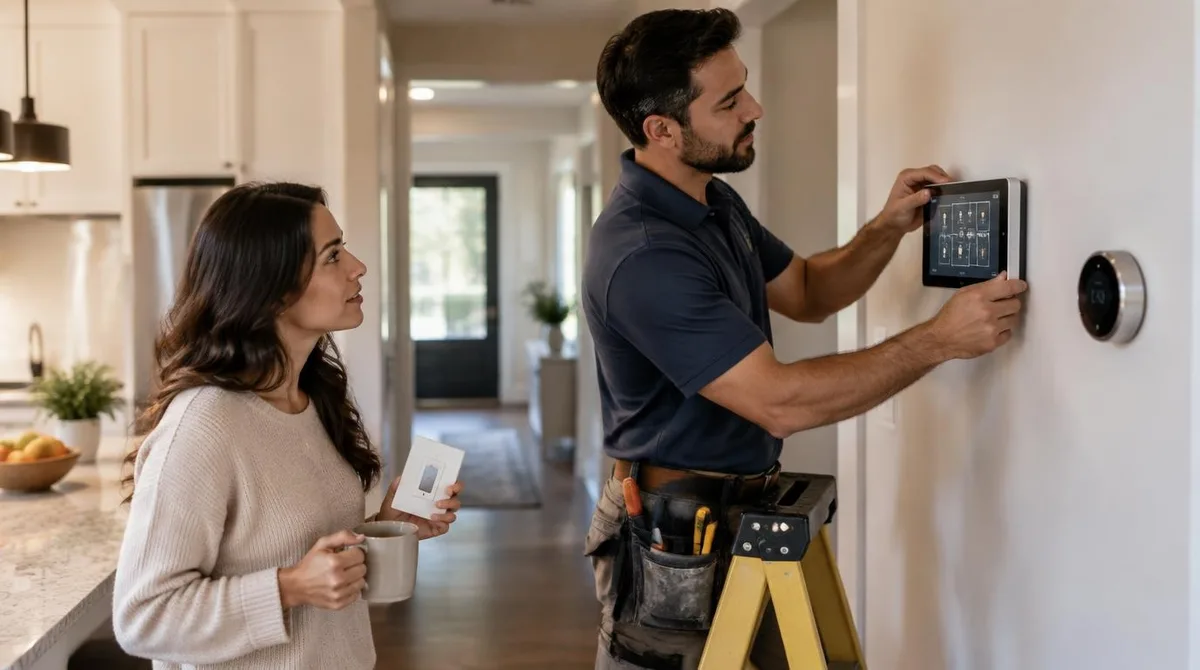
A smart home control panel is a fixed screen that runs the house from one wall. Lights, locks, cameras, climate and intercom all answer it. The idea flopped a decade ago as expensive touchscreens. It returned when standards made the software cheap and tablets made the glass cheap.
The panel is not a gadget so much as a place. Phones unlock, load and leave; the wall stays. Households with kids, guests or sour memories of app menus keep finding that a fixed surface beats a pocket one.
Why The Smart Home Control Panel Returned
The first wave died of lock-in. Each maker sold a panel that ran only its own gear, and the price of the glass bought a cage. Matter, from the Connectivity Standards Alliance, changed the math. One screen can now steer devices from any brand that carries the mark.
The thermostat pointed the way. One shared wall device survived every app fad because it needed no login and no lesson. Panels generalize that lesson to the whole house.
Tablet supply chains did the rest. Durable wall mounts, deep boxes and always on displays became commodity parts. What cost thousands now costs a screen and a Saturday.
Wall Panels Versus Phone Apps
Apps win for range; panels win for speed. A scene two taps away on a wall fires before a phone wakes. Guests and babysitters cannot be handed a phone login, but everyone can press a wall.
Costs split the difference. A panel, a mount and an electrician together land near a mid phone. Spread that over a decade of daily use by everyone who walks past.
Privacy follows the same split. A wall screen shows its camera state to the room. A phone hides it in a settings menu three layers deep.
Panels also hold ground where phones fail. Dead battery, wet hands, greasy fingers: the wall does not care. The Federal Trade Commission's advice on cameras in private rooms applies here too. A panel with a microphone belongs in shared spaces, not bedrooms.
Power, Boxes And Placement
Wiring decides most installs. A panel needs constant power, so plan a deep box and a circuit behind the wall. Height follows the household: counter height for kitchens, switch height for halls, lower for kids and wheelchair reach.
Placement rules are old ones. Away from direct sun, off exterior walls with vapor issues, near the door people actually use. A smart home control panel in the wrong spot is a very expensive light switch. Rental homes can cheat with a mounted tablet and a sticky pad, at the cost of elegance. Readers following this should also see Smart Home Appliances: What Connectivity Adds And What It Costs.
What A Good Panel Runs
Scenes first: one press that sets lights, locks and temperature for night or away. Intercom second, especially with room units. Camera feeds third, on the entry and the yard. Thermostat tiles last, because that dial still gets touched daily.
Good panels expose the rules without hiding them. Editing a scene on the wall should be as easy as triggering one. NIST guidance on connected devices favors clear update paths, and a panel that updates itself quietly passes that test.
Buttons still matter. A panel with a physical switch for the porch light survives every reboot, every update and every confused guest.
Guest codes finish the kit. A code that works for a week and dies on its own beats a key under a mat.
Conclusion: The Wall Ahead
The smart home control panel is settling into the slot the thermostat held: one fixed surface everyone shares. Watch for energy dashboards arriving with Matter reporting, and for panels that double as home network controls. Privacy toggles that mute mics with one press will matter more as the screens spread. The switch survived a century; the screen intends to match it. We covered a connected angle in Smart Home Sensors: Every Type And What Each One Detects.