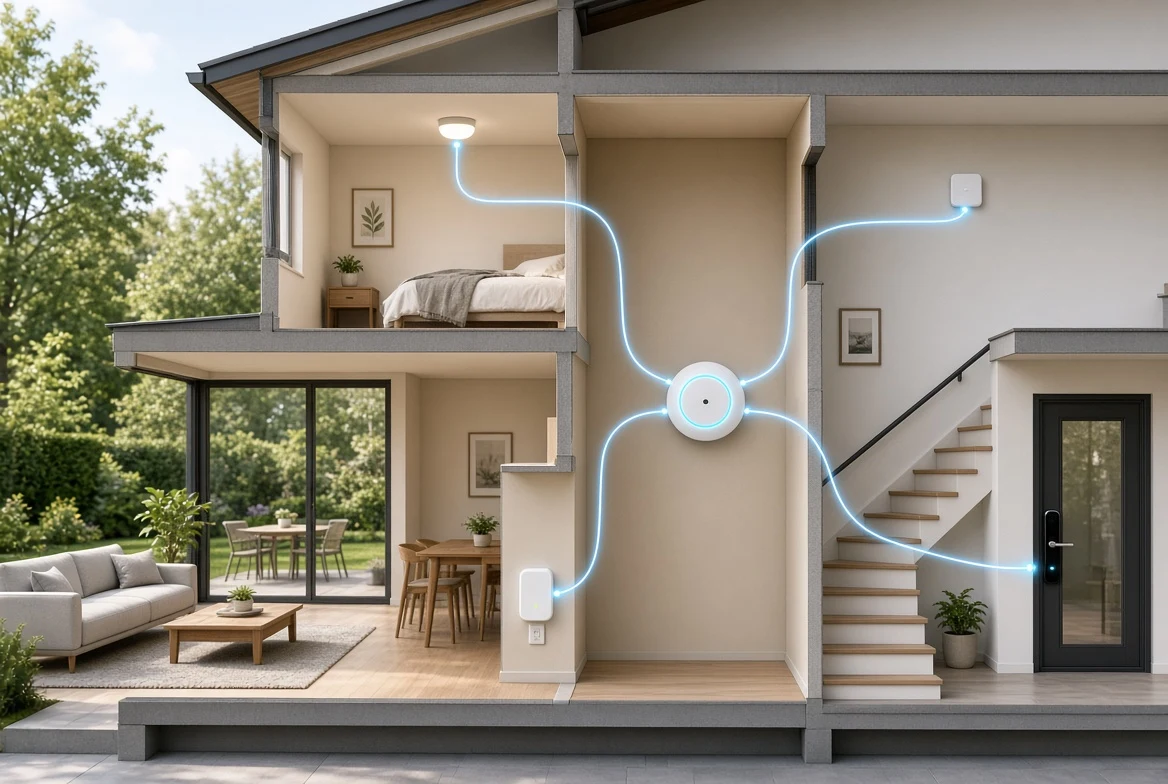
Smart home ideas work best when each one pays rent. The test is simple: does the device save money, save time or remove a daily annoyance? Rooms that pass the test differ from rooms that just look clever. Here is a room by room walk through of the ideas that hold up.
The anchor numbers come from official sources. ENERGY STAR puts heating and cooling near half the typical bill, over $900 a year. Certified washers use about 20 percent less energy and 30 percent less water than standard models. Ideas built on those figures start life in the black. For related coverage, see Smart Home Energy Management: What The Numbers Can Really Do.
Smart Home Ideas For The Entry
Start at the front door. A contact sensor on the door plus one hallway bulb gives a light that greets every arrival. A certified thermostat nearby learns the schedule. A lock with temporary codes ends the spare key under the mat. Nothing here costs much, and all of it gets used daily. A video doorbell rounds out the set, though it belongs after the lock on any budget list.
The entry also sets the security tone. The Federal Trade Commission advises changing every default login before a single camera joins the network. Good habits cost nothing and protect every room that follows.
The Laundry And Kitchen Numbers
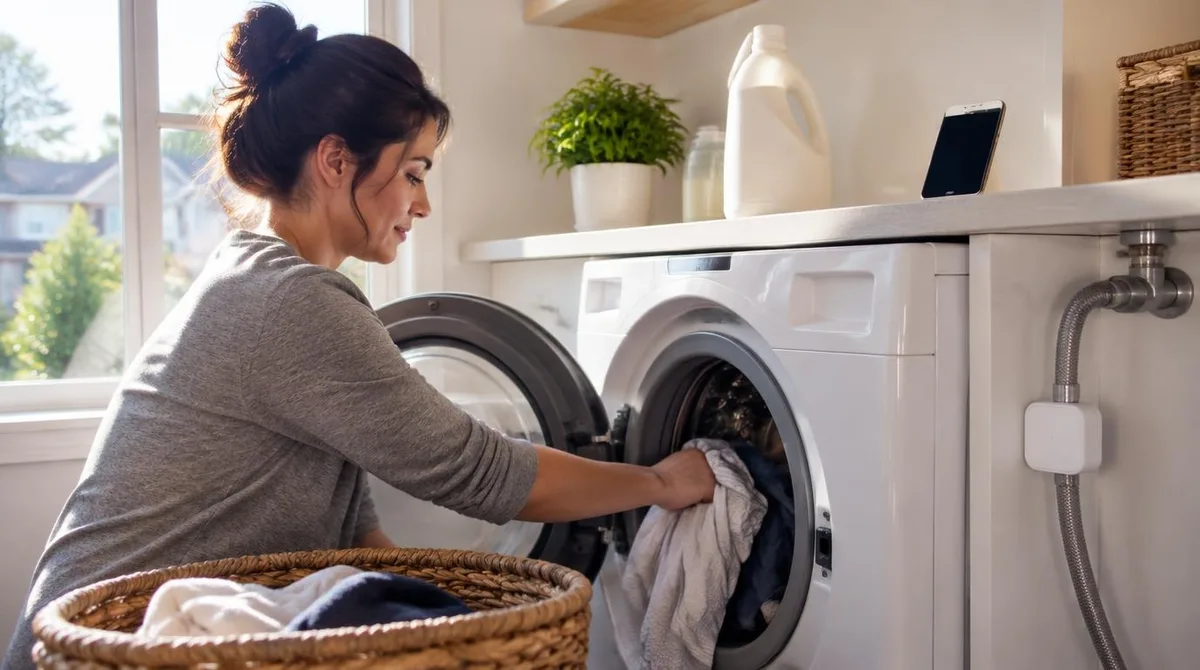
The laundry room is where the label matters. Certified washers cut energy use by about 20 percent and water use by about 30 percent. That saves roughly $530 over the machine's life, and each load uses about 14 gallons instead of 20. A leak sensor under the machine costs little and stops the classic flood.
In the kitchen, the old fridge is the target. A dated model can cost about $95 a year to run. Certified units run about 9 percent more efficient than the federal minimum. A smart plug with power metering makes the comparison honest.
The dishwasher belongs on the same list. Cycle done alerts stop the quiet rewashing that doubles water use. A small leak sensor guards the sink cabinet for a few dollars more.
Bedrooms, Halls And Small Wins
Bedrooms reward small moves. Warm bulbs on a sunset schedule, one smart plug for the fan, a humidity sensor for the nursery. Motion lit hall paths prevent night stumbles. None of it is exciting. All of it gets used.
Halls reward motion and lux sensors. Lights that come on dim after midnight guide night trips without waking the whole floor. It is a small mercy that earns its keep every single night.
Smart Home Ideas That Pay For Themselves
The payback list is short and boring. The certified thermostat returns about $50 a year on average. The washer saves about $530 over its life. A smart plug that finds one space heater left running can pay for itself in weeks. These smart home ideas carry receipts, not vibes.
What To Skip For Now
Some ideas still wait for maturity. Screen covered fridges cost a premium and answer few real needs. Smart faucets solve a problem that hands already solved. Voice controlled showers make a splash and little else. The rule holds: if an idea needs a demo video, it is not ready for a Tuesday morning.
Subscription tied ideas deserve a pause too. A gadget that needs a monthly plan keeps charging long after the novelty fades. One time purchases with local control age better on a shelf.
Conclusion: The Next Room
The next wave is already queued. Matter energy reports will let the dryer and the car charger talk to the meter. Rebate programs keep shifting the math by zip code, and labels move faster than reviews do. Start in the rooms that pass the rent test, and let the clever stuff wait outside. Smart home ideas age well when they arrive on order, not on impulse. This connects to our earlier piece, How To Set Up A Smart Home: Five Devices In Order.