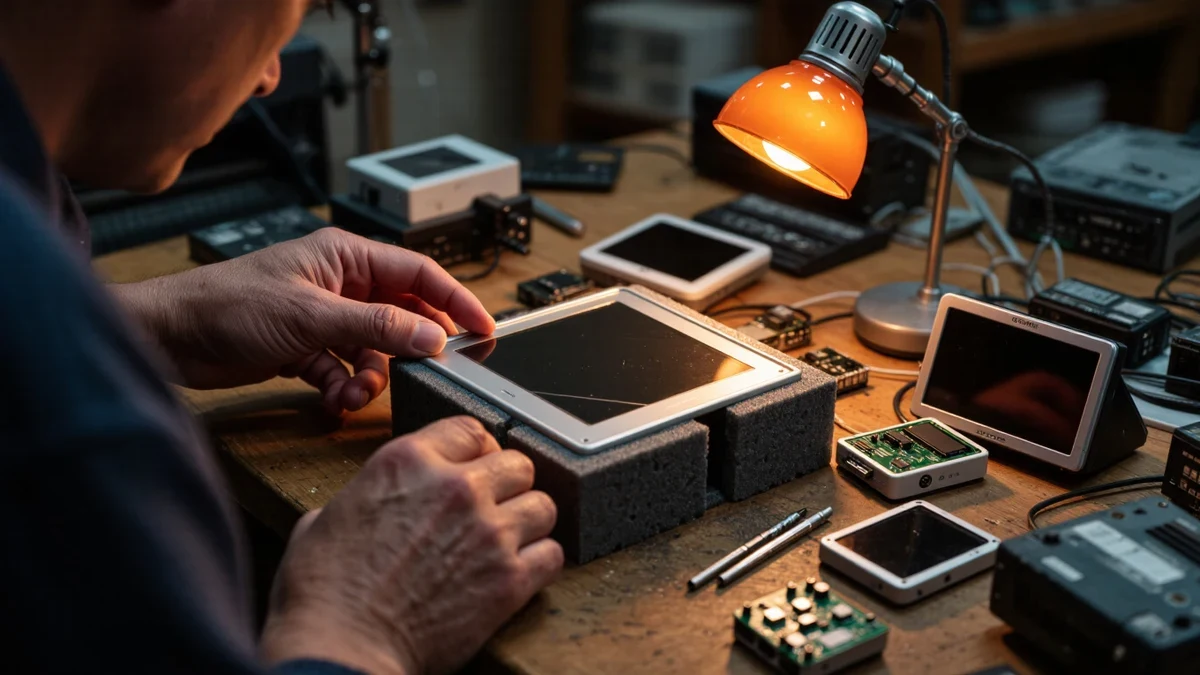
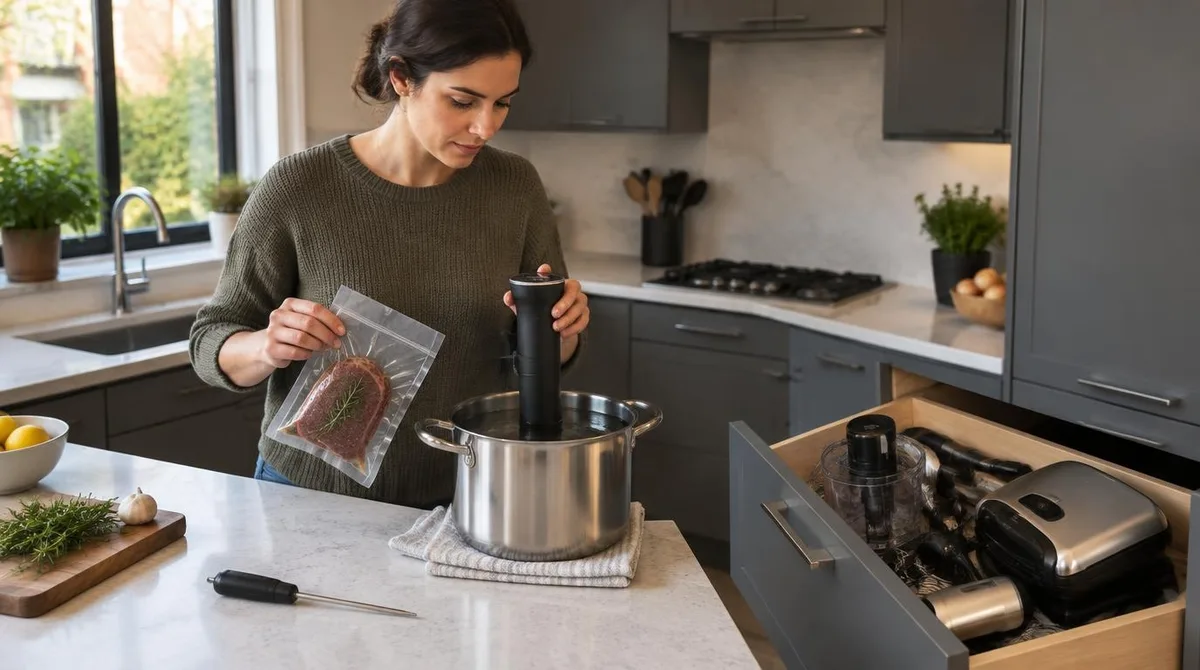
Cooking gadgets split into two camps, and the split is old. The split has names: method gear and motor gear. A few change technique: they let a cook do something a pan, an oven or a knife cannot do. The many merely repeat a pan's work with a motor and a marketing budget. The drawer is the referee, and it collects failures quietly. Sous vide circulators changed technique. A bath that holds one exact heat was chef gear before it was counter gear. Electric sandwich presses did not, because a skillet already made the sandwich. Every cooking gadget belongs to one camp, and the camp predicts the drawer.
The technique test is simple to run, and one question sorts the whole shelf. Does the tool add a new skill, or does it just automate an old one? Pressure cookers add a new skill: they change the physics of a boil. Choppers automate knife work, slower than a practiced hand and harder to clean. Cooking gadgets that pass the test stay for decades. Gear that fails it leaves for the garage sale within three winters.
A Test With Two Outcomes
The test cuts across price. A cheap probe passes; it closes a real gap. No hand can feel the middle of a roast. A costly one-job tool fails; money cannot buy new physics. The test also cuts across skill and across the resale pile. New cooks gain more from new-skill gear, which stands in for reps. Old hands gain more from auto tools, since their reps exist. The trap is buying an auto tool before the habit exists. That trap fills closets with bread machines.
Cooking Gadgets That Change Method
Four families pass reliably. Pressure vessels change time and heat at once. Circulators hold one heat, still. Strong blenders change texture, not just mixing. Counterside grinders change freshness, a taste edge no store fixes. Rice cookers ride the middle line; they automate well and hold heat, which earns a counter spot. Air fryers sit close to the line. They move hot air well, but an oven also moves hot air. Each family does something a stovetop cannot, with or without software. That is the dividing line for cooking gadgets, and it holds across brands and price points. We covered a connected angle in Smart Home Sensors: Every Type And What Each One Detects.
What the Fire Data Says
The safety floor matters more than the feature list. The National Fire Protection Association tracks the toll. Cooking equipment causes 44 percent of reported home fires and 42 percent of home fire injuries. Two-thirds of cooking fires start with food ignition, which means attention beats accessories. The U.S. Fire Administration adds the alarm rules. Use dual-sensor alarms, replaced ten years from the make date, and never pull a battery to quiet one. Grease and left-alone pans do the damage. A timer costs nothing. The hush button exists for cooking false alarms. No gadget on the counter outperforms that baseline. For related coverage, see Smart Home Appliances: What Connectivity Adds And What It Costs.
The Thermometer Exception
One cheap tool deserves its own paragraph. The instant-read thermometer answers a single question with authority: is it done. It removes the last honest excuse for guesswork. Safety inspectors have pushed probes for decades, for that exact reason. It costs less than a pizza and outlives most appliances. Digital probes read in seconds. Analog dials still work. In a category full of motors, the probe remains the highest-return cooking gadget ever sold.
Conclusion: The Pan Still Wins
The market will keep shipping motorized versions of knife work, and counters will keep rejecting them. Watch induction gear spread, since it changes control the way pressure changed time. Watch smart ovens chase the exact heat that circulators already hold. The pan still wins most nights, and the probe wins the close calls. Technique, not inventory, remains the actual cooking gadget. The best purchases stay boring, and boring cooks.