A smart home alarm system puts sirens, sensors and alerts on the household network. The label covers door and window contacts, motion sensors, glass-break mics and cameras. All of them report to a phone instead of a call center. The contrast with classic monitored security is not the hardware. Both kinds detect the same events. The difference is who answers when something triggers at two in the morning.
The category grew out of two streams. Cheap sensors cut the hardware bill, and shared smartphone apps cut the service bill. Cameras with on-device person detection arrived lately and cut the false alerts that plagued the first decade. The result: a smart home alarm system costs little to start and demands more judgment in return. Judgment, not gear, is the actual product. Both kinds still need power, spare batteries and a test schedule. We covered a connected angle in Smart Home Sensors: Every Type And What Each One Detects.
What the Term Actually Covers
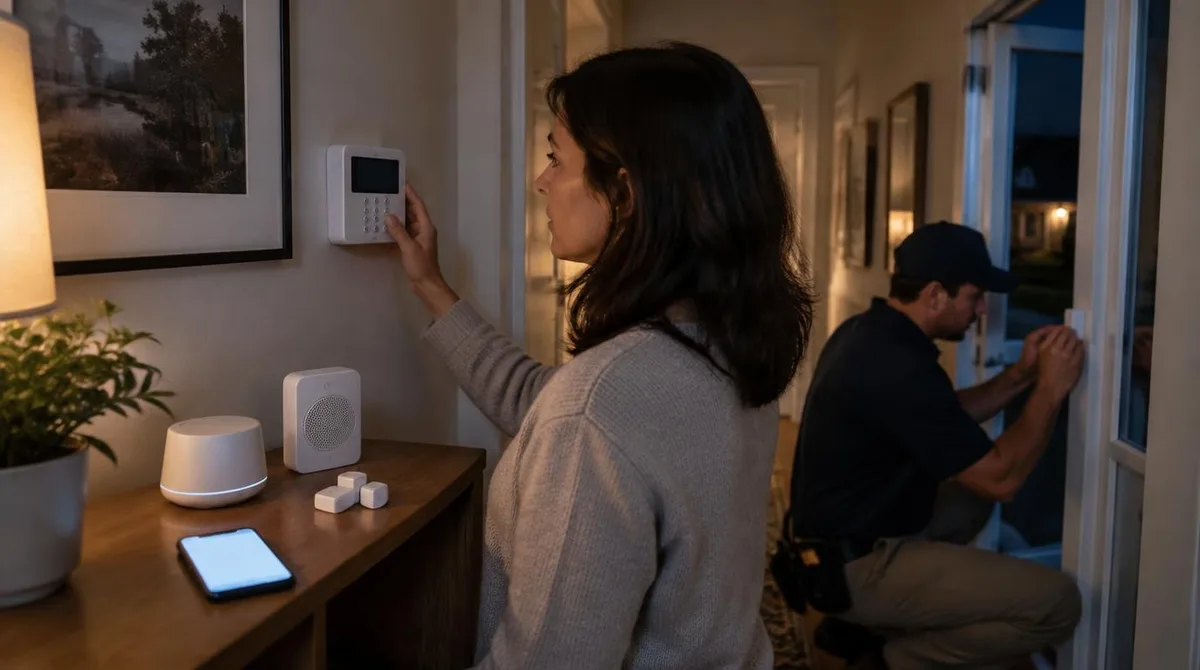
Most kits share a hub, a siren and a handful of sensors. The hub bridges radios to the home network and runs the logic. Entry sensors sit on doors and windows. Motion and glass-break units cover rooms. Keypads and key fobs persist for a reason. A phone makes a poor panic button, and wall pads survive dead batteries. Range and battery life beat feature lists on the spec sheet.
How a Smart Home Alarm System Reports Trouble
Alerts travel three ways. Push notices hit the phone over the internet. Sirens sound locally regardless of the network. Some hubs add cellular backup for when power and broadband drop together. A self-run setup hands all three to the owner, who may be asleep, driving or out of signal. A monitored setup hands them to a staffed center that verifies and calls for dispatch. Alert design matters as much as radio design. An alert that names the rear door beats a vague ping. Repeated false alarms train people to swipe warnings away unread.
Smoke Alarms Set the Base Layer
The U.S. Fire Administration keeps the placement rules. Alarms belong inside and outside each sleeping area and on every level, basement included. Homes need both ionization and photoelectric types, or a dual-sensor unit, because fires differ. Alarms carry a ten-year life from the manufacture date. Linked model lines sound as one, so a single heads-up wakes the whole floor. The agency also warns against pulling batteries to quiet cooking alarms. The hush button exists for that exact job. Those rules outlive any app feature.
Self-Monitoring Against the Call Center
The trade reads clearly in two columns. Self-monitoring costs nothing monthly and answers instantly to the person holding the phone. Monitoring service adds a fee and a stranger on shift. That matters for travel, heavy sleepers and homes with kids or elders. Fees also buy a second check on alerts, which trims false dispatches and the fines some cities charge for them. The Federal Trade Commission adds the security side. Its Careful Connections guidance lists the habits: change default passwords, require strong login, keep patches flowing. The advice applies double to any device guarding a door. Readers following this should also see Smart Home Appliances: What Connectivity Adds And What It Costs.
The Consumer Product Safety Commission runs the recall ledger. A quick search there before install day catches the rare sensor or hub with a battery flaw. The commission tracks lithium battery incidents in hubs and sensors as a rising category in its release feed. A ten-minute check beats a wall full of recalled gear.
Conclusion: The Answering Question
The gear keeps getting cheaper, and the physics of a loud 3 a.m. siren does not. Insurance discounts increasingly accept self-monitored proof, which shifts the math again. Watch cellular backup trickle down to budget hubs. Watch cameras with local storage answer the privacy critique. Watch for hubs that bridge local radios without any cloud account. The smart home alarm system question stays the same: who picks up, and how fast.