
Music gadgets form a market that resists order. A pocket synth, a pad controller and a tape-style pedal sit in one online aisle. They answer different questions. The working fix is taxonomy: sort music gadgets by what they touch. Some make sound, some shape sound, some capture it and some move it between the others. The families are stable even when the brands churn. Taxonomy also keeps budgets sane.
The order matters because the entry points differ. A beginner with a phone needs one family. A producer with a desk needs four. Money spent inside the wrong family buys a paperweight with knobs. Money spent inside the right family compounds, because each piece feeds the next. The order below is the order of a first purchase, not a dream rig. For related coverage, see Smart Home Sensors: Every Type And What Each One Detects.
The Families, Not the Brands
Family one makes sound: synths, drum machines, mini keyboards. Family two shapes it: effects pedals, filter boxes, loopers. Family three captures it: audio interfaces, field recorders, samplers. Family four connects it: MIDI controllers, mixers, cable ecosystems. Every product on the shelf belongs to one family first and a brand second. A looper straddles two and three. It records while it shapes.
Where Music Gadgets Cluster
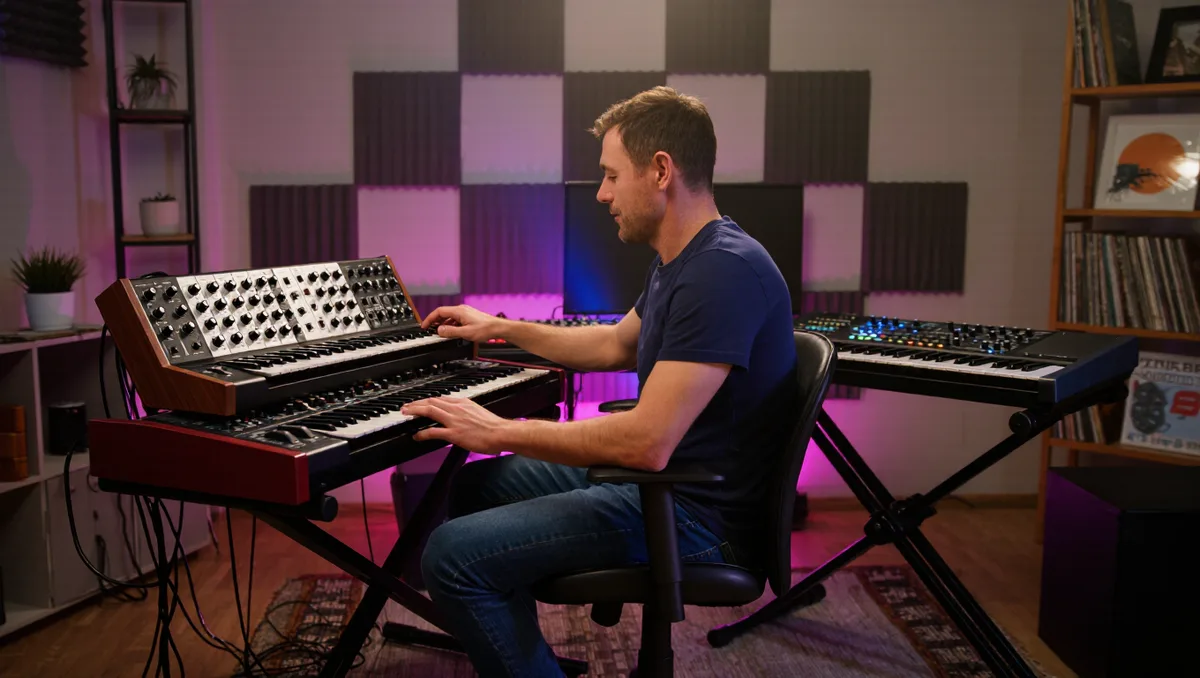
Pocket gear clusters around travel and impulse. Pocket synths run on batteries, trade screens for buttons, and sketch ideas faster than a phone app. Desk gear clusters around repetition. Desk samplers and pad controllers reward muscle memory, and they earn their footprint through daily reps. Stage gear is its own cluster, built for drop tests and dark stages. Music gadgets drift between clusters as they grow, and the drift explains most upgrade cycles. The pocket synth that started a hobby becomes a stage tool or a drawer relic. Pocket gear also travels. A sketch made on a train becomes a track by Friday. We covered a connected angle in Travel Gadgets That Survive the Airport, Sorted by Carry-On Role.
MIDI, the Quiet Standard
The connective tissue is MIDI, the note-data standard from the early 1980s. The MIDI Association exists to expand, promote and protect the standard, and its reach is the point. A controller from one brand plays a synth from another because the cables and messages agree. That agreement is why music gadgets hold value: the protocol outlives the products. Newer revisions carry more data, but the old plug still works, which is rare in consumer tech. Cables still outsell the fancy stuff. The five-pin plug refuses to die.
Wireless Sound and Its Trade
Wireless audio spread through the studio too. Speakers, mics and link systems ride Wi-Fi and related radio standards stewarded by bodies like the Wi-Fi Alliance. The trade is latency: a cable delivers sound now, a radio delivers it soon. For playback, soon is fine. For tracking and live loops, now wins. Latency shows up as a gap. The ear forgives it in playback and catches it in a groove. Wireless gear belongs in family four, where the job is moving sound, and the latency budget decides the placement.
The Laptop Is the Biggest Pedal
The most common music gadget is the computer, and it has an efficiency story. ENERGY STAR says certified computers use 30 to 40 percent less energy than standard models. Idle power management does most of the work. A studio laptop that runs all day benefits twice. The power bill drops, and battery headroom grows for mobile sessions. A quiet fan also helps. Microphones hear everything, including cooling. Docking stations round out the desk, and they belong to family four as well.
Conclusion: Small Boxes, Long Tails
The taxonomy ends where taste begins. Watch MIDI-capable pocket gear keep closing the gap between sketch and song. Watch wireless latency shrink until family four turns invisible. The desk shrinks while the standard stretches, and that mismatch is the whole product cycle. Music gadgets keep getting smaller; the protocol underneath keeps getting wider.