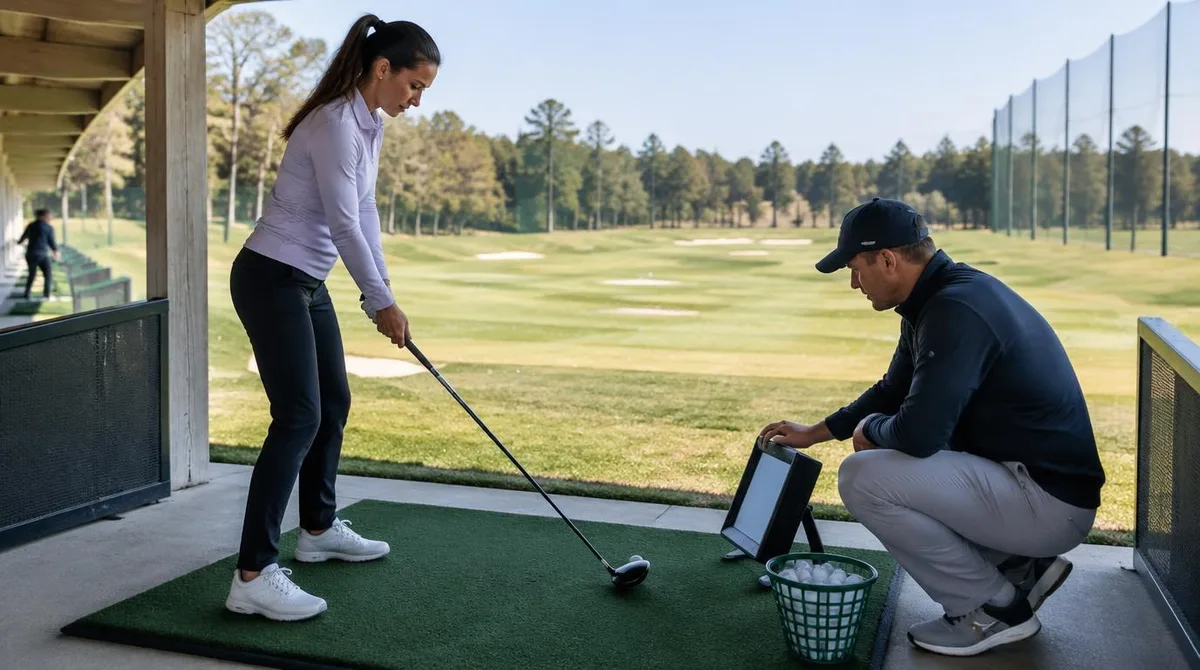
Golf gadgets promise numbers, and the numbers arrive thick. Ball speed, launch angle, spin rate, face angle, swing path and grip pressure: sensors chase all of it now. The useful question is not what the gear measures but what a player can act on. A number that cannot change the next swing is a toy with a screen. A number that can is a lesson that costs nothing after purchase. A bucket of balls then turns the lesson into a habit. The rules add a second filter. Some readings are legal on the range and illegal on the course.
The rules filter is not fine print. The R&A, which co-governs the rules with the USGA, sets the line in Rule 4.3a. During a round, players may use devices for distance and direction. The same rule bars devices that measure elevation change or interpret the data, such as suggesting a club. Committees may also ban distance devices entirely through a Local Rule. The rule text is public and short, which helps. Golf gadgets that ignore 4.3a risk penalties even in casual play, since many clubs adopt the rule language wholesale.
Numbers First, Rules Second
The order of evaluation matters. First ask what the number changes. Then ask where the number is legal. A launch monitor earns practice hours. Ball speed and spin respond to grip, stance and path changes the player can feel. A slope-adjusting rangefinder earns nothing extra in competition, because slope reads fall outside Rule 4.3a during play. Most gadgets now ship with a competition mode that switches the illegal math off. The switch exists because the rule, not the engineer, draws the line. For related coverage, see The Smart Home Light Switch: A Cheap First Step Done Right.
Golf Gadgets on the Legal Side of 4.3a
Three categories sit safely inside the rule for everyday play. Plain rangefinders and GPS watches report distance, which the rule explicitly allows. Compass and direction data stay legal as well. Statistics apps that record scores and shot spots stay legal. They report rather than advise during the round. The legal golf gadgets share one shape: they inform the player and stop short of choosing. Advice is the boundary the rule keeps drawing, in 2019 and since.
What a Launch Monitor Actually Sees
Launch monitors read two moments. At impact, they estimate face angle, club path and speed. Shortly after, they read ball launch, spin and flight. Camera-based units watch both moments visually. Radar-based units track the ball and infer the club. The two families trade accuracy indoors and out, and both improve yearly. What they cannot do is feel the swing. A monitor reports that a slice exists; the grip, the path and the lesson fix it. Data describes the problem, and practice remains the cure. Many units sync swings to a phone log, which helps the range work travel.
Grips, Sensors and Feel
Smart grips and swing gloves push sensors onto the hands. Grip pressure data is genuinely new information, since coaches have guessed at it for a century. The catch is turnover: grips wear and get replaced, and electronics shorten that cycle. Pressure data also needs interpretation to matter, which loops back to lessons. The sensor category works best as a check on feel, not a substitute for it. Sensors add weight to the grip too, and hands notice. A quick recall search on any battery-powered training gear, through the CPSC index, closes the purchase loop. We covered a connected angle in The Smart Home Control Panel: Wall Screens That Replaced The Switch.
Conclusion: The Scorecard Sorts Them
The gadget market will keep growing because the measurements keep getting cheaper. Watch rule revisions as governing bodies revisit what devices may do mid-round. Watch launch monitor prices collapse the way GPS watches already did. The scorecard still sorts golf gadgets better than any spec sheet. Numbers that lower it stay. Numbers that merely appear ride home unused. Cheap data beats expensive guesses.