
Smart home news in 2026 runs less through product launches than through standards bodies. The months that matter bring a spec release, a radio adoption or an energy label tightening. Those events move whole shelves of devices at once, while a single gadget launch moves one box. Reading smart home news well means sorting the signal by committee, not by brand. That rule holds for shoppers, testers and retailers alike.
The shift has a cause. Early smart homes grew brand by brand, and each brand built its own radio, cloud and app. Buyers noticed the lock-in. The industry answered with shared specifications, and now the real headlines arrive as release notes. Committees move slower than blogs, which is the point. A spec that ships late still binds every product that adopts it. A household that tracks two or three standards bodies knows the market a year ahead of the store shelf.
Why the Beats Come From Standards Bodies
A spec release sets the ceiling for every product that follows it. When a protocol adds a device type, makers can build against it. When a security requirement lands, old stock ages overnight. That is why release notes read like earnings reports for this market. Committee work also sets test rules. A device type without a test plan ships as a logo with nothing behind it. The dates are public, the scope is public, and the effects show up in stores two quarters later.
How to Read Smart Home News Without the Hype
A filter helps. First, check whether a story names a standards body and a version number. Second, check whether the feature needs new hardware or just firmware. Firmware arrives free; hardware means a purchase cycle. Third, note the energy angle, because efficiency rules quietly decide which gadgets survive. A fourth filter: the word roadmap. Roadmap items are promises; shipped specs are facts. A story about a new lock type deserves one check: does the spec list it, or only a slide deck? Smart home news that fails all four filters is usually a press release in costume. We covered a connected angle in Smart Home Sensors: Every Type And What Each One Detects.
Matter, Thread and Wi-Fi Under One Stack
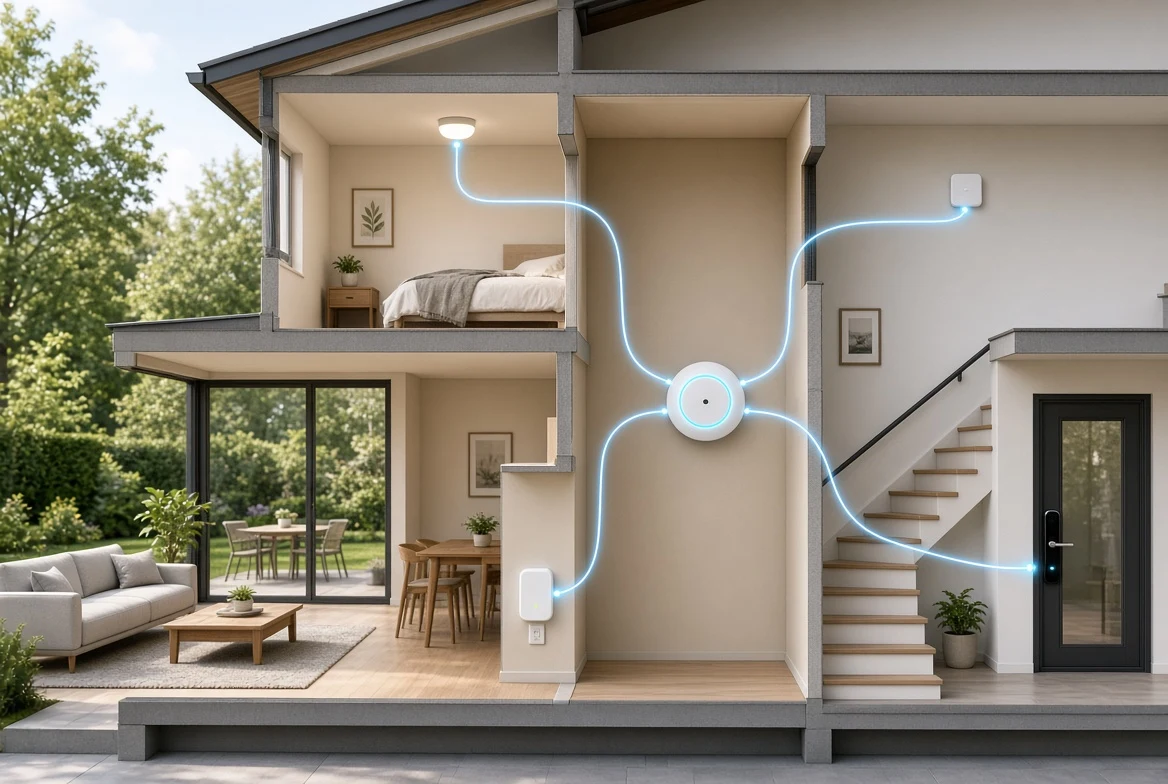
The Connectivity Standards Alliance maintains Matter, the protocol that lets devices from rival brands work together. The CSA says Matter rides on Wi-Fi and Thread network layers, with Bluetooth Low Energy handling setup. The Thread Group tends the low-power mesh radio underneath, and the Wi-Fi Alliance tends the high-bandwidth layer above it. One stack, three stewards. Rival layers still compete at the edges. Some makers push proprietary radios for locks and shades. Those islands resist the tide for now. A Matter release note is the closest thing this market has to a state of the union.
Energy Labels Quietly Steer the Roadmap
Efficiency programs shape the gear as much as protocols do. ENERGY STAR certifies smart thermostats on verified field data. Certified units join utility programs that pay for load shifts. The same label drives power management into computers, displays and appliances. Rebate checks follow the label too. A certified thermostat on the right utility plan can earn its cost back inside a season. When a label tightens, the next device generation follows, because retailers and rebate programs lean on it. Standards fights get the clicks; energy rules move the watts. Readers following this should also see Smart Home Appliances: What Connectivity Adds And What It Costs.
Conclusion: The Next Release Cycle
The reading list stays short. Watch CSA release notes for Matter version jumps and new device types. Watch the Thread Group for radio changes that reach doorbells and sensors. Watch the Wi-Fi Alliance for the low-power variants aimed at battery gear. Watch the efficiency agencies, because their quiet spec dates decide what the plugs look like. The boring sources stay the most reliable: specification PDFs, changelogs and agency notices. Smart home news rewards those who read committee minutes and skip the launch videos.