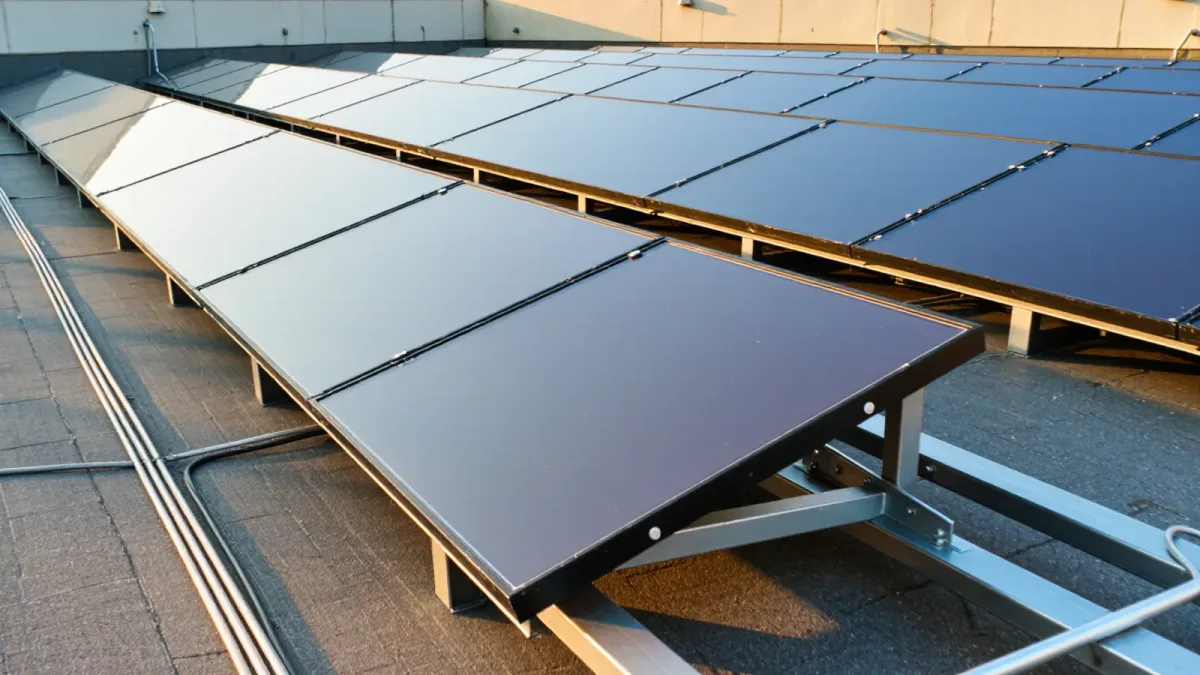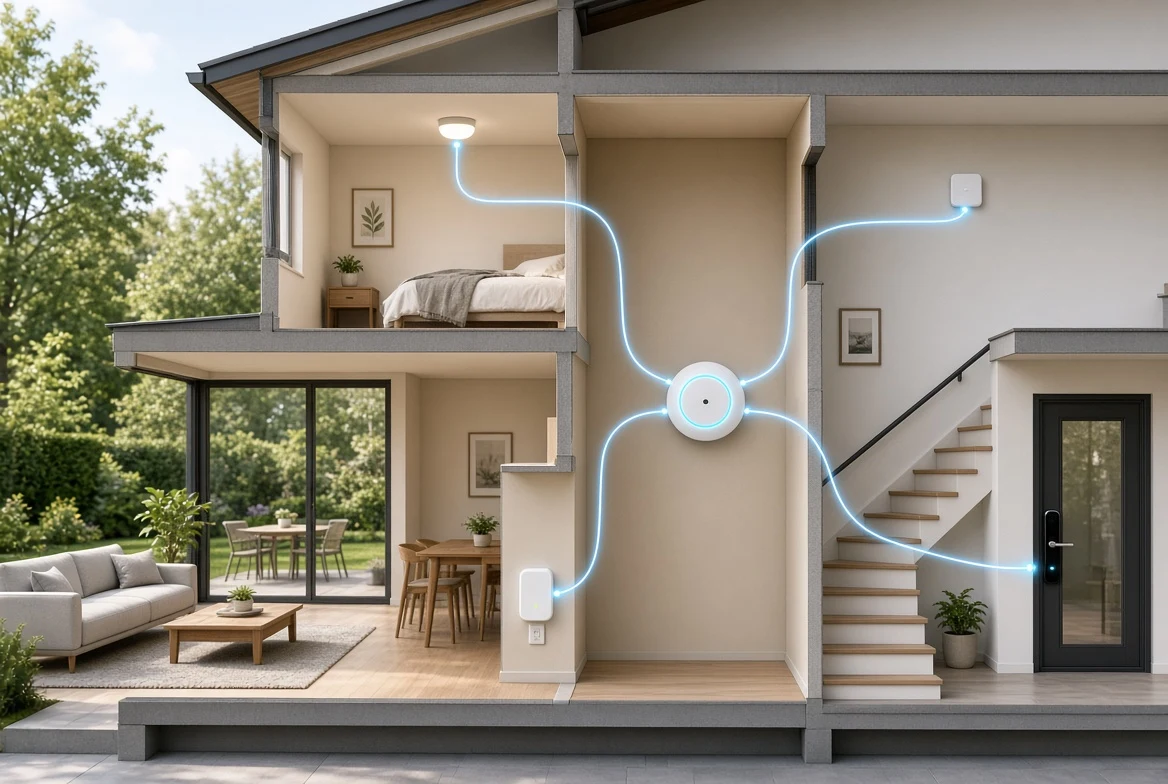
Smart home solar has two halves, and they age at different speeds. The half on the roof is quiet, proven and slow to change. The half inside the app changes every quarter, and it decides what the panels are worth to a household. The Energy Department describes the roof half plainly. A single photovoltaic cell makes one or two watts, so cells get chained into modules, and modules into arrays. Smart home solar begins where that chain meets a screen.
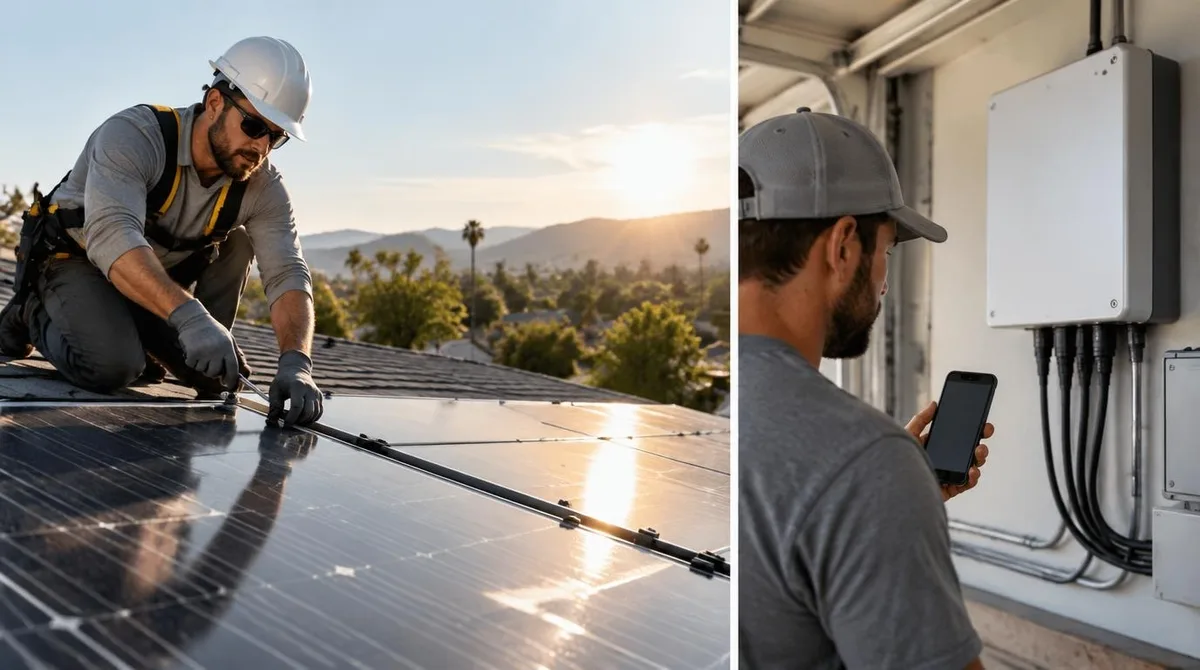
The bridge between the two halves is an inverter. It converts the direct current the panels make into the alternating current a house runs on. String inverters serve the whole array at one point. Microinverters sit under single panels and report each one alone. Modern inverters also report output panel by panel. The data streams to an app and flags shade, dirt or a failing string. That reporting layer is what turns a roof job into a smart home solar project. This connects to our earlier piece, The Smart Home Installer Trade: Credentials, Quotes And Red Flags.
The Quiet Half on the Roof
Cells are thinner than four human hairs, stacked under glass for weather duty. The department notes the same modular design scales from a garden shed to a warehouse. For a house, the practical variables are roof angle, shade lines and local rules on grid hookup. Permits and grid rules sit between the roof and the meter. Every utility runs an interconnection queue, and the wait can outlast the install. The array earns nothing until the paperwork clears.
Where Smart Home Solar Gets Complicated
The app layer does three jobs. It meters production, it estimates savings against the utility bill, and it schedules loads to match the sun. A dishwasher or a car charger that runs at solar noon costs less than one that runs after dark. Some utility programs pay for that shift. ENERGY STAR certifies smart thermostats that join them, on verified field data. Home batteries join as a third leg. They bank midday surplus for the evening peak, and their apps bid that power against time-of-use rates. The catch is data dependence. When the app retires, the panels keep working and the insights stop. For related coverage, see Smart Home Sensors: Every Type And What Each One Detects.
The Tax Credit and the Paper Trail
The IRS runs the Residential Clean Energy Credit. It returns 30 percent of qualified clean energy costs, solar electric panels included, with no dollar cap for solar. The claim rides on Form 5695 in the year the system goes into service. Lease and power-purchase deals change the math. The finance company keeps the credit and sells the output back. Buyers signing one should read the exit terms twice. The paperwork rewards patience either way. A production estimate, a metering agreement and a warranty file all outlive the sales visit.
Scam Patterns the FTC Already Flagged
The Federal Trade Commission published a consumer alert on solar scams in September 2024. The patterns are consistent. A rep promises free panels, or claims a government program covers the cost. A tablet appears for a signature before the full contract does. The alert adds one more flag: pressure to pay large sums up front. The FTC advice is simple. Solar is not free, and no honest deal collapses within an afternoon. A real installer quotes, measures and waits.
Conclusion: The Meter Becomes an Interface
The panels are the boring half, and that is good news. The interesting half is the software stack that prices sunlight by the hour. Watch two things next. First, utility rules on exporting power keep shifting state by state. Second, home batteries are turning apps into arbitrage tools that buy cheap grid power and sell dear. None of that shows on the roof, and all of it shows in the app. Smart home solar is drifting from a hardware purchase toward a subscription with a roof attached.